No! No! No! There goes another another villain who, while crazy as a bag of cats, somehow seems to have their shit together enough to make our valiant heroes look like a bunch of circus clowns. It's frustrating to read and aggravating to watch when put to a screen. How has this social defective managed to leave our champions with their pants around their ankles and spanked like a frat pledge? Sure, we're talking about a criminal mastermind, and one who's prepared for pantsing protagonists as part of the evil plan, but also who's been artfully crafted to be a challenge. Mental aberrations aside, I think this may be why some people develop a love for certain villains.
Villains driven by emotional anguish (often some perceived tragedy they've overreacted to or, worse, caused) tend toward focus and intensity. This makes them more on their game than the average person and that dark intensity draws an audience emotionally. You know who else benefits from this? Batman. Yeah, a big shock, I know. What a lot of people forget is that Superman used to enjoy that same sort of mojo.
Superman's spent a lot of years as a symbol of law and order, but he started out as a crusading rebel for truth and justice. Before his powers grew to levels that allowed him to perform large scale rescues, he spent a lot of his time battling social injustice and corruption. Without the restraint he would develop after a few years on the job (which would also bring on a full origin; his first radio show, in fact, had him arriving on Earth as an adult), Superman fought criminals and championed the common man against systemic oppression with less concern for law than for justice and truth. It was the patriotic rallying cry of war that shoved him into the role of boy scout. He was polished into a partner of the establishment, given to a softer touch. On the cover of Action Comics #1, he's smashing criminal's getaway car (a move actually depicted in the story). Almost seventy years later, when Superman Returns pays homage to that iconic moment, that scene is sort of replicated, but with a runaway car that's rescued and goes from being hoisted overhead to being gently set on the ground.
Technically, the same thing happened to Batman and Wonder Woman, but it was necessary to help them all survive the post-WWII era that saw psychiatry and Congress try to turn the people against them. Since bringing Robin in to sidekick for Batman had backfired by triggering claims of homoerotica rather than paternalism, many efforts were made to normalize the heroes. The less-than-edgy dark knight was even given a platinum badge to show how great an establishment supercop he'd become. The influential 60s TV show added the character of Dick Grayson's aunt, Harriet Cooper, to Wayne Manor's residency to break up the sausage party with a wholesome, family friendly image.
Still, Batman being who and what he is was the easiest to drag back across the line, out of the light and into the dark from whence he came just as they had spawned The Shadow before him. In the 70s, Denny O'Neill re-established him as a grim, nightstalking detective in a dangerous, dark Gotham. After Crisis on Infinite Earths, Frank Miller was tapped to turn the caped crusader into a rebel again. He still had Jim Gordon as a friend in law enforcement, but that was about it. Relegated to the shadowy fringes of society once again, he gave the imperfect world around him the help it needed whether it was wanted or not. And it was decided, of course, that he and Superman should no longer be buddies.
It's a hard thing to make Superman feared while he's publicly saving lives, abating disasters, and then racing off to save the world again. Powerhouse that he has become, he also has to be instilled with copious levels of restraint so he's not portrayed as a bully who does whatever he wants whenever he pleases. Being superhumanly good is simply a better fit with the narratives of Wonder Woman and Superman.
Still, I was thinking that if the loss of Krypton were to keep the Man of Steel more focused on saving Earth and its people, even from themselves, it would be easier to paint the picture of a Superman intensely determined to save the world. Superman jumping in to help whether it was wanted or not, concerned more about truth and justice and Freedom yet little about law or the desires of government, would force discussion of issues touched upon in half-assed fashion in Dawn of Justice. Indeed, how would the world cope with a man of Superman's capacities after he's shifted alignments from Lawful Good to Chaotic Good with a passionate drive to save us from our own self-destructiveness?
Showing posts with label Batman. Show all posts
Showing posts with label Batman. Show all posts
Wednesday, May 17, 2017


Thursday, May 14, 2015
17749--Dark Knight Perspective
"I got yer neverending battle, right here!"
Take this as you will, but I really do like Batman. I'm probably not telling you anything you don't already know when I say he has no superpowers. Part of his appeal to most people is that he is so very human.

He is possessed of great intellect and will that he has applied to great personal development academically, physically, and practically. He is also a man driven by powerful emotion, fueling his ongoing war against crime and injustice. Also making his unique lifestyle possible, Batman is possessed of epic wealth. Among other things, that's how he gets those wonderful toys.
Still, there's a segment of the population that doesn't think splitting time between his day job and night job is enough to keep him busy. Some want to see the differences in operational styles and philosophies as friction for fight club action with Superman of all people. Superman!
It's an insane idea in my book. Bad enough to think Batman, known for being as single-minded and relentless as a shark, would find grappling another caped orphan to be a productive use of his time. Add to that, Superman has more power than Batman has money, so you make Batman look more like Wile E. Coyote going after the Road Runner.
 Now, this I could get behind. Imagine Batman making use of millions of dollars of specialized equipment and his supreme confidence in his genius to put guys like Superman and Flash to the test as they go zipping around...saving people. They might even notice him. And not leave him standing in his cowl and boxer shorts in Gotham Square before he has time to register he's even moved.
Maybe Batman could just stick to being helpful.
Where I really enjoy seeing Superman and Batman go head-to-head is over on the How It Should Have Ended website. They have coffee and spar verbally. Far more plausible.
Take this as you will, but I really do like Batman. I'm probably not telling you anything you don't already know when I say he has no superpowers. Part of his appeal to most people is that he is so very human.
.png)
He is possessed of great intellect and will that he has applied to great personal development academically, physically, and practically. He is also a man driven by powerful emotion, fueling his ongoing war against crime and injustice. Also making his unique lifestyle possible, Batman is possessed of epic wealth. Among other things, that's how he gets those wonderful toys.
Still, there's a segment of the population that doesn't think splitting time between his day job and night job is enough to keep him busy. Some want to see the differences in operational styles and philosophies as friction for fight club action with Superman of all people. Superman!
It's an insane idea in my book. Bad enough to think Batman, known for being as single-minded and relentless as a shark, would find grappling another caped orphan to be a productive use of his time. Add to that, Superman has more power than Batman has money, so you make Batman look more like Wile E. Coyote going after the Road Runner.
 Now, this I could get behind. Imagine Batman making use of millions of dollars of specialized equipment and his supreme confidence in his genius to put guys like Superman and Flash to the test as they go zipping around...saving people. They might even notice him. And not leave him standing in his cowl and boxer shorts in Gotham Square before he has time to register he's even moved.
Maybe Batman could just stick to being helpful.
Where I really enjoy seeing Superman and Batman go head-to-head is over on the How It Should Have Ended website. They have coffee and spar verbally. Far more plausible.
Saturday, April 25, 2015
17730--What're you looking at?
It’s still a little early yet, so I won’t say the lines have
been clearly drawn. I do feel it’s safe
to say they’re being drawn, though.
Anyone who’s spent a bit of time reading from this site might expect that
I have an opinion of my own.
Now, don’t think Batman and I don’t get along. We do.
I also think it’s crazy to go looking for a fight with Superman. Friends don't let friends...do things that colossally stupid. That’s a choice best left to bad guys...who have no friends (which might have something to do with why they're bad guys). I feel this way because when I ask “What
would Superman do?” (WWSD), the answer is easy: the right thing. When the harshest thing that comes out of
name-calling the big farm boy is “boy scout”, it’s hard to argue this.
Lots of people like to credit Batman’s extreme preparedness
tendencies for a large part of his successes.
Sure, that’s got to go a long way, especially when combined with his
resources, intellect, and relentless drive.
Certainly, if he were going to even dream of fighting Superman (the
place he’d have the best odds of victory, btw), Batman would need to make the
most of all he has. Even Superman doesn’t
do that anymore. Those of you too new to
the characters probably don’t realize how much the comic book creatives have
taken away from Superman over the years, attempting to play up more of the man
and less of the super. I think they’d
developed not only a fear of their own inability to challenge the hero
effectively, but also that audiences were having trouble relating to him as a
superhuman. Diminishing his physical
abilities wasn’t enough, though.
Superman’s intellect and scientific prowess were also greatly reduced,
while Batman’s were increased. Tipping
those scales is significant to how the characters are portrayed, but I’d still
advise Batman to stay on Superman’s good side. Honestly, met with even minimal resistance, how hard would it be to disable someone with even a fraction of Superman's powers or using only a few of them. Imagine having powers available that you have to always be careful not to use at anywhere near their full potential because of all the incidental damage they could cause. This is why Godzilla can't go to the mall and the Powerpuff Girls can't play tag in Townsville.
Superman’s not a character usually shown as being
arrogant. If anything, his levels of
lawfulness and self-discipline often have him labelled as boring. Even so, which seems to be what’s played upon
in the upcoming confrontation that has the internet abuzz, many people fear
him. In a recent interview, when a
pro-Superman Jon Stewart asked Neil deGrasse Tyson about his take on the coming
clash, Tyson’s opinion was that Superman is feared because he is accountable to
no authority and “does what he wants”.
Sadly, that attitude, far from unique to Mr. Tyson, is one that
discounts the fact that what Superman wants to do is apparently help
people. Again, WWSD? You know.
When I don’t trust the NSA or the CIA, you can probably put
together a list as to why. If you boil
it down to a summation that says their capabilities give their people the power
to “do what they want”, it’s not hard to imagine a number of dark results that
go with that. If I were to say that I
don’t trust Santa because his power and position let him “do what he wants”, at
some point you have to acknowledge that that seems to result in handing out
toys to children and encouraging socially acceptable behavior. When Lex Luthor “does what he wants”, people
die. When Superman “does what he wants”,
the world is a better place: lives get saved, wrongs get righted, bad guys soil
themselves. Sometimes, he even hands out
toys to children and encourages socially acceptable behavior (without the
questionable bits about exploiting animals, spying on you while you sleep, sneaking into your home, or using a racially homogenous minority
workforce). Unless you’re a bad guy, fear
of Superman is misguided at best.
The Dark Knight’s own darkness is merely something he has
embraced to fight the darkness around him.
Never forget that the Wayne Foundation does a lot of good works. Batman (and by extension, his cover ID of
Bruce Wayne) really does want a better world where children don’t grow up as
orphans of murdered parents; where Batman is unneeded. As for Superman, though he was raised here,
he’s alien and that does make him different.
Some people want to hang their fears on him rather than their
hopes. Just as Batman dwells in the dark
and looks for the darkness in others, Superman is of the light. He draws power from the light. He seeks the good in others. Those who would fear him need to ask
themselves, are they truly afraid of Superman or of what he might find? The truth many people have to deal with is
that the real problem they have with those they would denigrate as being “too
good” isn’t the goodness, but the fear of being measured as “bad” in
comparison to it.
Saturday, December 28, 2013
17246--In Dark Places
At least some of us pay attention to the world around us.
When we do, many of us wonder what goes on in the minds of those who shun the light, those who wear the mask of humankind yet commit deeds deemed dark, violent, and just plain evil against others. What makes those we call villains villainous?
Is it as simple as attachment? Is it clinging to desire for things denied? Not all who want go so far as to impose their will on others, though. What pushes one person to violate the rights of another? We've all heard it before. The common experiences that drive these actions are fear, anger, hatred and suffering. Fear itself is anticipatory of an experience. Anger and hatred are indicators of the level of attachment placed on experiences. Suffering is what remains, the scars of a traumatizing experience typically measured in terms of perceived intensity and endurance. At its worst, suffering survived manifests as madness, scarring so severe on one's intangible essence of self that the resultant alterations can become utterly abhorrent. Those whose selves have become so lost as to become a menace to themselves and those around them, may have no chance of recovery.
"Whom the gods would destroy, they first make mad," said Prometheus (Longfellow, The Masque of Pandora).
To be cut from the cloth of Moriarty, Keyser Soze, Ozymandias, Morgan Le Fay, Shiwan Khan, Sauron or Emperor Palpatine, is to have found the path to wrangling the wills of others. It was easily done because the will of others is insignificant next to people whose self-perceived greatness has set them beyond the laws and conventions of ordinary mortals. Megalomania is a special form of madness where an easily understandable lust for greater power is coupled with genius enough to make it seem attainable. From there, who knows how far one may try to run with it?
Penguin, on the other hand, does have distinctive personality traits. His upbringing was that of a studious "mama's boy". She's the one who pushed him to always carry the umbrella. He's very intelligent, but also obsessive. He has been portrayed as greedy, cunning, vengeful, social-climbing, approval-seeking. His drives come from greed, obsession and insecurity. Unlike many of Batman's foes, he's not emotionally disturbed or blatantly insane. He is, however, determined not to be the impoverished, persecuted misfit he was as a child.
Lex Luthor's desire for greatness is certainly megalomania, but his usual entertainment of blissfully crushing the dreams of others (not to mention the occasional bare-handed strangulation) and toying with their tiny lives became overshadowed by his burning hatred for Superman. Worse than having his spotlight stolen, suffering the humiliation of interference in his plans is more than Luthor is willing to endure. His greatest goal is to see Superman dead, with impunity, by his hand. Luthor is so dedicated to this end that he has even helped Superman against other villains to save Superman for himself.
Maybe that sounds crazy, but he's not the only one who'd go so far. Stop me if you've heard this one...
Joker's stand-out feature isn't that he's a cunning mastermind or even the snappiest dresser (not to say he has anything short of killer fashion sense), but a mind driven to chaos. Born from suffering and loss, his unbridled unpredictability is one of his greatest assets. He wants to dance and Batman is the only dance partner he truly cares about. The steps he takes to lead the way into madness are those he thinks are funny. He doesn't just kill anyone available or steal shiny things. He doesn't just spray acid and create mayhem for mayhem's sake. He does it all for laughs. How dark is the heart that sees every bruise, broken bone or murdered victim not as perpetrated evil, but as one more punchline in a neverending series of jokes?
When we do, many of us wonder what goes on in the minds of those who shun the light, those who wear the mask of humankind yet commit deeds deemed dark, violent, and just plain evil against others. What makes those we call villains villainous?
Is it as simple as attachment? Is it clinging to desire for things denied? Not all who want go so far as to impose their will on others, though. What pushes one person to violate the rights of another? We've all heard it before. The common experiences that drive these actions are fear, anger, hatred and suffering. Fear itself is anticipatory of an experience. Anger and hatred are indicators of the level of attachment placed on experiences. Suffering is what remains, the scars of a traumatizing experience typically measured in terms of perceived intensity and endurance. At its worst, suffering survived manifests as madness, scarring so severe on one's intangible essence of self that the resultant alterations can become utterly abhorrent. Those whose selves have become so lost as to become a menace to themselves and those around them, may have no chance of recovery.
"Whom the gods would destroy, they first make mad," said Prometheus (Longfellow, The Masque of Pandora).
To be cut from the cloth of Moriarty, Keyser Soze, Ozymandias, Morgan Le Fay, Shiwan Khan, Sauron or Emperor Palpatine, is to have found the path to wrangling the wills of others. It was easily done because the will of others is insignificant next to people whose self-perceived greatness has set them beyond the laws and conventions of ordinary mortals. Megalomania is a special form of madness where an easily understandable lust for greater power is coupled with genius enough to make it seem attainable. From there, who knows how far one may try to run with it?
Penguin, on the other hand, does have distinctive personality traits. His upbringing was that of a studious "mama's boy". She's the one who pushed him to always carry the umbrella. He's very intelligent, but also obsessive. He has been portrayed as greedy, cunning, vengeful, social-climbing, approval-seeking. His drives come from greed, obsession and insecurity. Unlike many of Batman's foes, he's not emotionally disturbed or blatantly insane. He is, however, determined not to be the impoverished, persecuted misfit he was as a child.
Lex Luthor's desire for greatness is certainly megalomania, but his usual entertainment of blissfully crushing the dreams of others (not to mention the occasional bare-handed strangulation) and toying with their tiny lives became overshadowed by his burning hatred for Superman. Worse than having his spotlight stolen, suffering the humiliation of interference in his plans is more than Luthor is willing to endure. His greatest goal is to see Superman dead, with impunity, by his hand. Luthor is so dedicated to this end that he has even helped Superman against other villains to save Superman for himself.
Maybe that sounds crazy, but he's not the only one who'd go so far. Stop me if you've heard this one...
Joker's stand-out feature isn't that he's a cunning mastermind or even the snappiest dresser (not to say he has anything short of killer fashion sense), but a mind driven to chaos. Born from suffering and loss, his unbridled unpredictability is one of his greatest assets. He wants to dance and Batman is the only dance partner he truly cares about. The steps he takes to lead the way into madness are those he thinks are funny. He doesn't just kill anyone available or steal shiny things. He doesn't just spray acid and create mayhem for mayhem's sake. He does it all for laughs. How dark is the heart that sees every bruise, broken bone or murdered victim not as perpetrated evil, but as one more punchline in a neverending series of jokes?
Saturday, June 8, 2013
17043--Mental Health for the Wealthy
Batman. There, I said it. The name carries a weight and imagery all its own. Not all of the lore is absolutely consistent, but it has been entrusted to different creative hands across the character's many decades so that sort of thing has come to be expected. Different aspects of the hero have been put in the spotlight at different times, making him something akin to the elephant described by five blind men. He's a master of disguise. He's a master of escapes. He's a brilliant detective. He's a crime fighter. He's pretends to be a socialite playboy, but he's a philanthropist. He's a crusading superhero out to make a world where no child ever again has to grow up without parents. All these things are true and can all be seen as aspects of one man in the right light.
Among Batman's virtues, what I've heard spoken of as most appealing most often is that "he's just a man." The meaning in that is that he holds appeal by not being superhuman. That much is something I've noticed that his creative stewards have been careful to maintain. That a man can drive himself by will and shape his form through diligent work to become as strong, studied, focused and prepared as any man could hope to be has brought him not only the ability to stand beside those who inherently possess greater capacities, but great respect.
While his many admirers may want to be him, the songs of his praise do not include the desire to repeat the tragic circumstances of the youth who watched his beloved parents murdered in front of him. Needless to say, it's hardly the sort of thing anyone sane would invite upon their own person nor wish upon another. If the double homicide and orphaning are deemed to have no appeal, despite being the spark that ignited Batman's war against crime, one must ask if the event is essential. Would there still be a Batman without it? As there aren't countless thousands finding themselves inspired to remake their own lives in the absence of such a redefining tragedy, we have to concede that such scarring plays some importance in motivation. Sure, we have a few hundred people scattered about dressing in colorful tights and tactical gear to act as neighborhood watches, but while they may call themselves superheroes, they're just half-assing it compared to Batman. All that obsession doesn't just come out of nowhere. I imagine we'd also be hard-pressed to find a ten-year-old who watched his parents get murdered and not be further traumatized when we told him after the funeral that we were sending him off to the Shaolin monastery as the first step in a fifteen year globe-trotting training program.
One of the other essential pieces of the Batman puzzle also has to be the great wealth left to him by his dearly departed parents. Some regard it as a super power in itself. I consider it to be such an integral part of him, that it is not only a resource available to him, but a crucial part in his making. Not only did his parents' wealth make them targets for robbery, but their son's subsequent inheritance of it is what allowed him to become the fully realized Batman. Absent his wealth, he might've been just an enraged child suffering PTSD who made his way through public schools and foster care. Upon adulthood, rather than travelling the world to seek training in the skills that would make him a superior crime fighter, he would find himself pressed to find work to support the basics of living. Before long we have a bright young man with lackluster grades, plagued by nightmares, waking to cold sweats, thrust into wearying twelve-hour work days on odd shifts who barely wants to get out of bed. His edge blunted, Batman would never have developed. Wealth and its attendant life of privilege allowed him the luxury of brooding. Somehow, it never included the psychological counseling that would've been pretty much automatic today. I suppose no one mentioned that to Alfred way back when. Perhaps it wasn't seen as the thing to do. He was a boy. Boys get told to "suck it up." Alfred's a British butler, so he probably found a classier way to say it. "Stiff upper lip, sir. Have some more tea. Scone?" And then he has the nerve to nag his adult charge for becoming what he has become.
The Onion News Network did a very entertaining piece on a boy of about the right age who had recently seen his parents murdered. They brought the boy onto a TV network morning show for a brief interview, then surprised him with his all-expenses paid trip around the world. During the trip, he would spend the next dozen years with monks, combat masters, expert detectives, master thieves, etc., so that he could return as an adult to wage his war against crime in the memory of his deceased parents. The youth was dragged from the set in confused protest to be taken to a waiting jet. That kid has more of a chance at a "normal life" than Batman.
Sure there have been a lot of other people with murdered family members joining the war against crime, rather than riding a psychiatrist's couch, but who else has done it with the impact of Batman? The Punisher? Spider-man? Element Lad? Elektra? Daredevil? The Lone Ranger? No, not even the cavalcade of Robins. Whether on antidepressants or not, either way, the young master found himself screaming to thunderstorms at graveside and vowing oaths of vengeance. That's mental healthcare only extreme wealth can buy. That's OK, though, because Batman is what he's supposed to be. If he'd gotten over it, he'd be healthy and "normal" and who wants to read the adventures of Bruce Wayne, billionaire playboy philanthropist? The same people who dress-up as him for Halloween.
Nobody, that's who. Fire up the Bat-signal.
Among Batman's virtues, what I've heard spoken of as most appealing most often is that "he's just a man." The meaning in that is that he holds appeal by not being superhuman. That much is something I've noticed that his creative stewards have been careful to maintain. That a man can drive himself by will and shape his form through diligent work to become as strong, studied, focused and prepared as any man could hope to be has brought him not only the ability to stand beside those who inherently possess greater capacities, but great respect.
While his many admirers may want to be him, the songs of his praise do not include the desire to repeat the tragic circumstances of the youth who watched his beloved parents murdered in front of him. Needless to say, it's hardly the sort of thing anyone sane would invite upon their own person nor wish upon another. If the double homicide and orphaning are deemed to have no appeal, despite being the spark that ignited Batman's war against crime, one must ask if the event is essential. Would there still be a Batman without it? As there aren't countless thousands finding themselves inspired to remake their own lives in the absence of such a redefining tragedy, we have to concede that such scarring plays some importance in motivation. Sure, we have a few hundred people scattered about dressing in colorful tights and tactical gear to act as neighborhood watches, but while they may call themselves superheroes, they're just half-assing it compared to Batman. All that obsession doesn't just come out of nowhere. I imagine we'd also be hard-pressed to find a ten-year-old who watched his parents get murdered and not be further traumatized when we told him after the funeral that we were sending him off to the Shaolin monastery as the first step in a fifteen year globe-trotting training program.
One of the other essential pieces of the Batman puzzle also has to be the great wealth left to him by his dearly departed parents. Some regard it as a super power in itself. I consider it to be such an integral part of him, that it is not only a resource available to him, but a crucial part in his making. Not only did his parents' wealth make them targets for robbery, but their son's subsequent inheritance of it is what allowed him to become the fully realized Batman. Absent his wealth, he might've been just an enraged child suffering PTSD who made his way through public schools and foster care. Upon adulthood, rather than travelling the world to seek training in the skills that would make him a superior crime fighter, he would find himself pressed to find work to support the basics of living. Before long we have a bright young man with lackluster grades, plagued by nightmares, waking to cold sweats, thrust into wearying twelve-hour work days on odd shifts who barely wants to get out of bed. His edge blunted, Batman would never have developed. Wealth and its attendant life of privilege allowed him the luxury of brooding. Somehow, it never included the psychological counseling that would've been pretty much automatic today. I suppose no one mentioned that to Alfred way back when. Perhaps it wasn't seen as the thing to do. He was a boy. Boys get told to "suck it up." Alfred's a British butler, so he probably found a classier way to say it. "Stiff upper lip, sir. Have some more tea. Scone?" And then he has the nerve to nag his adult charge for becoming what he has become.
The Onion News Network did a very entertaining piece on a boy of about the right age who had recently seen his parents murdered. They brought the boy onto a TV network morning show for a brief interview, then surprised him with his all-expenses paid trip around the world. During the trip, he would spend the next dozen years with monks, combat masters, expert detectives, master thieves, etc., so that he could return as an adult to wage his war against crime in the memory of his deceased parents. The youth was dragged from the set in confused protest to be taken to a waiting jet. That kid has more of a chance at a "normal life" than Batman.
Sure there have been a lot of other people with murdered family members joining the war against crime, rather than riding a psychiatrist's couch, but who else has done it with the impact of Batman? The Punisher? Spider-man? Element Lad? Elektra? Daredevil? The Lone Ranger? No, not even the cavalcade of Robins. Whether on antidepressants or not, either way, the young master found himself screaming to thunderstorms at graveside and vowing oaths of vengeance. That's mental healthcare only extreme wealth can buy. That's OK, though, because Batman is what he's supposed to be. If he'd gotten over it, he'd be healthy and "normal" and who wants to read the adventures of Bruce Wayne, billionaire playboy philanthropist? The same people who dress-up as him for Halloween.
Nobody, that's who. Fire up the Bat-signal.
Saturday, December 22, 2012
16875--Irreconcilable Differences
Once again, finding myself pondering the crossing paths of good and evil, often manifesting themselves through the antagonists and protagonists of our entertainment. Some are more treasured than others, the characters' relationships resonating within us in their own special ways.
A truly challenging villain whose complex character forces the hero to rise with the best of his inner strength will always be appreciated and can easily steal the show. The best of the worst can go so far as to carry a story all their own, becoming anti-heroes in some cases. How many of James Bond's villains make great conversational fodder outside the context of being one of James Bond's villains?
Heroes so tortured they have to overcome their personal conflicts as well as whatever dastardly fiend has dared to threaten his world will undoubtedly earn our respect.
Throwing these two into the mix together will almost guarantee the creation of a dance as memorable as it is iconic. Usually one of these two can find the other staring back from the mirror. Superheroes make the best subjects to study for this sort of thing because the best ones will have an array of colorful villains, each a twisted reflection of the hero in his own way. They're easy to spot because they're the most memorable. They make an impact on the psyche and you get an automatic set, protagonist and antagonist, in one stroke. On the downside, many of them lose a lot of their mojo without their opposite to contest. Reverse-Flash? Venom? Red Skull? OK, Red Skull is pretty bad even without Captain America, but you get the idea.
Bizarro is a blatantly flawed attempt at copying Superman here on Earth, resulting in tragic and often dangerous consequences. Self-made orphan Lex Luthor uses his intellect and cunning to seize all the power and glory he feels that Superman has stolen from him, but seeks the spotlight for all the wrong reasons. Daunting as they are, as reflections of the hero, they are incomplete characters without him.
Joker embodies irrationality and madness. Scarecrow demonstrates the negative application of fear as a weapon. Mr. Freeze has become cold and detached after the tragic loss of a loved one. The Penguin is a shunned socialite who falls prey to his own obsessiveness. To prove his intellect, Riddler is pathologically driven to create puzzles. Catwoman craves the thrills she finds while in costume. They all reflect facets of Batman, but show a twisted path he managed to avoid.
What dark twists of the heroic soul have stood out in your mind?
A truly challenging villain whose complex character forces the hero to rise with the best of his inner strength will always be appreciated and can easily steal the show. The best of the worst can go so far as to carry a story all their own, becoming anti-heroes in some cases. How many of James Bond's villains make great conversational fodder outside the context of being one of James Bond's villains?
Heroes so tortured they have to overcome their personal conflicts as well as whatever dastardly fiend has dared to threaten his world will undoubtedly earn our respect.
Throwing these two into the mix together will almost guarantee the creation of a dance as memorable as it is iconic. Usually one of these two can find the other staring back from the mirror. Superheroes make the best subjects to study for this sort of thing because the best ones will have an array of colorful villains, each a twisted reflection of the hero in his own way. They're easy to spot because they're the most memorable. They make an impact on the psyche and you get an automatic set, protagonist and antagonist, in one stroke. On the downside, many of them lose a lot of their mojo without their opposite to contest. Reverse-Flash? Venom? Red Skull? OK, Red Skull is pretty bad even without Captain America, but you get the idea.
Bizarro is a blatantly flawed attempt at copying Superman here on Earth, resulting in tragic and often dangerous consequences. Self-made orphan Lex Luthor uses his intellect and cunning to seize all the power and glory he feels that Superman has stolen from him, but seeks the spotlight for all the wrong reasons. Daunting as they are, as reflections of the hero, they are incomplete characters without him.
Joker embodies irrationality and madness. Scarecrow demonstrates the negative application of fear as a weapon. Mr. Freeze has become cold and detached after the tragic loss of a loved one. The Penguin is a shunned socialite who falls prey to his own obsessiveness. To prove his intellect, Riddler is pathologically driven to create puzzles. Catwoman craves the thrills she finds while in costume. They all reflect facets of Batman, but show a twisted path he managed to avoid.
What dark twists of the heroic soul have stood out in your mind?
Friday, August 31, 2012
16759--Secrets Worth Keeping
 The lore of many cultures tell the tales of superhuman beings walking about in the guise of mortal men. The storytellers did their best, using the framework of mortal understanding available to them, to explain why they would do such a thing as to slum with the little people. All told, it's just part of the pattern in a long tradition of people trying to make sense of things outside their normal experience.
In ancient times, men understood that these early undercover excursions from above were used as opportunities to test mankind. It gave the worshipped time to interact with humans eye-to-eye rather than on their knees and staring at the floor. It also indicated that ancient mankind didn't see their gods as all-knowing and could learn from interacting closely with mortals.
Long after the age of gods, man's stories told of the age of heroes. While the earliest champions were dynamic figures of eternal vigilance, eventually, there came those heroes who had to create an additional layer of defense against overwhelming foes. Such consideration brought first The Scarlet Pimpernel and later Zorro into being. For these characters, disguise allowed them to operate in open opposition to oppressive governmental action and to move through society as a law-abiding individual. This afforded them both time as icon and to walk about calmly as one of the people, like the gods of old, gathering knowledge and perspective. Unlike the gods, the Pimpernel and Zorro identities protected the ordinary men from personal reprisals against their property and loved ones. For the storytellers, ooooh, an added level of tension: what dire consequences will come should our hero's secret be revealed?
Were these valid concerns? The signers of the Declaration of Independence might have said so. Their public defiance of the British government cost many their homes, businesses and wealth, due not only to collateral damage from the Revolutionary War but to specific targeting of the rebels. Examples had to be made. Not only were the defiant men hunted and imprisoned when possible, but also their families. Some took Robin Hood's example and sought refuge in the wilderness. Those who would succeed them would have to be aware of the potential price of publicity.
The majority of our modern superheroes are almost automatically expected to maintain the secrecy of their private identities. Over the years, some have gone to complicated lengths to do this. A rare few have had the added complication of additional identities, some costumed and some civilian. A few others have managed to keep distance between their public and private interactions (Spiderman dates from different circles than Peter Parker), but others haven't done as well. Superman and Clark Kent have a lot of the same close friends, for example. Over the last couple of decades, a lot of people have made decisions to have superheroes either stop keeping their secret from those closest to them or revealing themselves to the world-at-large. Seems that people want to keep pulling their masks off.
I've never found myself to be in agreement with such choices. It may be a result of growing up in an era where superheroes guarded their secrets with almost fanatic dedication. Gradually, society has come to shoot down the idea of people having any secrets from loved ones. This has resulted in some costumed adventurers spilling their guts after a couple of dates instead of waiting till the relationship got really serious (Barry Allen didn't tell Iris about how close she had become to The Flash till their wedding night). It has also shown us close friends and lovers taking offense at having been lied to for years when they're finally brought in on things.
Really? As though it was any of their business. Now, if I were a close friend of someone like Peter Parker or Clark Kent and they were considering telling the world about their whole dual identity lifestyle, I would certainly appreciate some warning if not consultation before I found myself a target of reporters and vengeful villains. Otherwise, if they're keeping things secret, that's their business. If they miss a few lunches or have to run late sometimes with only a lame cover story, that's OK. Friends understand.
Did I find Tony Stark's revelation in the "Iron Man" film amusing? Yes. I even found it in character. I laughed when a reporter brought up the disbelief of the "bodyguard" story that had been offered for so long in the comics. Still, as they showed in the next film, public revelation had consequences. Superheroes aren't ancient gods. Well, most of them aren't. The rest, by revelation, put themselves at risk when their guard is down. Not a good idea. They make those close to them specific targets. Also, bad idea.
[On a side note: I think it's always been telling of bad guys who grab Lois or Jimmy to threaten Superman. It shows how the bad guys think. For someone like Superman (which should include all other heroes, though it doesn't), anyone makes a viable hostage. Using known friends is just for inflicting extra pain.]
Unless you're secretly able to fly out to deflect asteroids yourself...? Is there something you want to share?
Friday, July 13, 2012
16710--Writing is Not the Place to be Shackled by Realism
 I've heard that some writers get bored by their projects. I count myself as fortunate, having never been plagued by such ennui or writer's blocks. If you're going to write, you should have love and enthusiasm for your work. I don't think you can really give it your honest best otherwise.
As I sat at my keyboard (big shock), pounding out my work-in-progress (WIP), the teenager I continue to feed came to me with his latest idea. Unlike most, this one was about me rather than himself.
"You need to do audiobooks," he said. "Y'know, for your books."
"Well, it's a thought," I told him, "but I'm not really--"
"Then you could get people to listen to you tell them about your books," he said, "instead of having to read them."
I decided not to take that in a negative way and explained that I liked the idea of actors doing the reading rather than doing it myself.
"Oh!" he said with a wild-eyed flash of inspiration. "Could we get Samuel Jackson to do it?"
"While that might be interesting," I said, "I'm not sure he does that sort of thing and I'm pretty sure I couldn't afford him."
"Oh, well, how about Batman?" he asked.
"Which one?"
"ummmm...Not Adam West. Batman Beyond," he said.
"You want Kevin Conroy?" I asked. "He played Batman in that and Batman: The Animated Series."
"No, the other one. Who played Terry?" he asked.
"Will Friedle. He was Ron Stoppable. He's Lion-O, now."
"Oh, I know, Clint Eastwood," he said, convincing me he had no grasp of this whole thing at all.
"Clint Eastwood."
"Yeah," he smiled and nodded. "How about him?"
"Dude, he's one of the biggest box office draws on the planet," I explained as clearly as possible. "If I can't afford Samuel Jackson, there's no way I'm going to be able to pay Clint Eastwood. On top of that, Clint only uses about twenty-five words a year and I don't think he's going to waste them working for me."
"Really? Only twenty-five words?" he asked.
Yeah, that was his take-away. "Don't worry about it," I said. "When the time is right, I'll look into a small cast of unknowns."
He slunk off a little deflated, but raced back about twenty seconds later.
"Oh, I know! James Earl Jones!"
"Which part of 'can't possibly afford to pay' is not getting through?" I had to ask.
"If I had a million dollars," he said, "I'd give it to him for you."
"And while I do appreciate that," I told him, "I don't think you want to give it all up on a reading gig."
"But you'd make it all back on the audiobooks, see?""
Who could ask for more confidence in a business manager?
"I think, perhaps, you're overestimating Mr. Jones' fee as well as the return on investment we could expect on the project, but thanks."
.jpg) |
| Now, this fine fellow would be worth the million. |
All that said, a lot to learn, but points for enthusiasm and positive thinking.
Keep writing.
Friday, June 22, 2012
16689--From the Heart of Darkness Comes the Neverending Battle
Long ago, in the midst of rampant crime and economic depression, July of 1930 heard the eerie voice of The Shadow brought to life in radio broadcasts as the announcer of Street and Smith's Detective Story Hour. That was only the beginning, though. Once The Shadow started chilling spines, he moved from merely announcing stories to starring in his own adventures. Inspired by his example, scores of other heroes followed on his heels to be presented to a public hungry for uplifting tales of heroic salvation. Most of those following in the dark vigilante's wake were pale copies, lacking the appeal that would give a few the staying power that would maintain their popularity for decades to come. 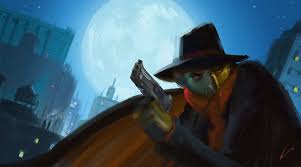
But why? Why did some persist and others fail? Why was anyone writing stories of heroic fiction at all? I mean, besides "for the money."
The time of ancient myths and legends was long since gone. Humans had grown beyond the point where they tried to explain the wonders of the universe through the supernatural workings of divine beings. For good or ill, the people of the world were fending for themselves, firmly entrenched in a grim reality of their own making. Under the crushing weight of the Great Depression, crime, unemployment and fascism were all flourishing. People felt unsafe in their homes or lost their homes entirely, some moving to other countries entirely to escape the impending threat of global war they felt powerless to stop.
The need had arisen not only to escape the dark truths of life but to foster hope for better times. A void had been carved in the hearts of the common men by increasing feelings of ineffectualness in their own world and they were desperate for a way to fill it. These needs called forth the creation of the pulp heroes with an impetus never before seen in the modern world. Pulp heroes would grow into super-heroes, like the legends of ancient myth, all working beyond the hindrance of confining laws to banish the fears of ordinary men. Nietzsche warned us to "Battle not with monsters, lest ye become a monster," but we crafted our heroes specifically to become the composite avengers of society's collective soul. Heroes overcame whatever fears were embodied by their opposition, fighting ceaselessly for truth, justice and freedom that readers felt themselves denied in their daily lives. Defying Nietzsche, here were champions serving as inspirations to all--no matter how poor, downtrodden or oppressed--as they dared gaze into the abyss of all the world's dark places.
Whether they fought darkness while draped in the color of night in the manner of The Shadow and Batman or sought to dispel it with the guiding light of hope for the future like Doc Savage and Superman,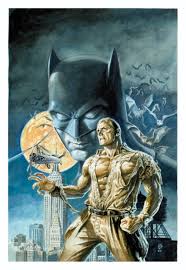 we have never truly lost our need for iconic heroes. In recent years, with increasing amounts of cynicism afoot, we've seen the rise of anti-heroes and the darkening of heroic figures, perhaps finally succumbing to the weight of fighting so much evil for so long. They say that tarnishing these icons humanizes them, making them seem more real and relatable to audiences. In its own way, this trend toward favoring a flawed hero may be part of a collective self-awareness as to just how close to home the hero's true foe dwells.
A common lament in heroic fiction is the hero's claim that he works to create a world in which he will no longer be needed. No matter how far we travel, how much we strive or learn, until we overcome our own darkness--the fears that lurk in the hearts of man--we'll never run short of evils to fight or the need for champions to face them. In truth, even though our heroes seem to be caught in nothing less than neverending battles, what they truly represent is our collective desire to better ourselves and our world. Should we as a people reach a point where we cynically banish our heroes it would mean that we have chosen to do away with our role models, ceased projecting the better and more hopeful parts of our natures and, sadly, stopped imagining a brighter world in which to live.
But why? Why did some persist and others fail? Why was anyone writing stories of heroic fiction at all? I mean, besides "for the money."
The time of ancient myths and legends was long since gone. Humans had grown beyond the point where they tried to explain the wonders of the universe through the supernatural workings of divine beings. For good or ill, the people of the world were fending for themselves, firmly entrenched in a grim reality of their own making. Under the crushing weight of the Great Depression, crime, unemployment and fascism were all flourishing. People felt unsafe in their homes or lost their homes entirely, some moving to other countries entirely to escape the impending threat of global war they felt powerless to stop.
The need had arisen not only to escape the dark truths of life but to foster hope for better times. A void had been carved in the hearts of the common men by increasing feelings of ineffectualness in their own world and they were desperate for a way to fill it. These needs called forth the creation of the pulp heroes with an impetus never before seen in the modern world. Pulp heroes would grow into super-heroes, like the legends of ancient myth, all working beyond the hindrance of confining laws to banish the fears of ordinary men. Nietzsche warned us to "Battle not with monsters, lest ye become a monster," but we crafted our heroes specifically to become the composite avengers of society's collective soul. Heroes overcame whatever fears were embodied by their opposition, fighting ceaselessly for truth, justice and freedom that readers felt themselves denied in their daily lives. Defying Nietzsche, here were champions serving as inspirations to all--no matter how poor, downtrodden or oppressed--as they dared gaze into the abyss of all the world's dark places.
Whether they fought darkness while draped in the color of night in the manner of The Shadow and Batman or sought to dispel it with the guiding light of hope for the future like Doc Savage and Superman,
A common lament in heroic fiction is the hero's claim that he works to create a world in which he will no longer be needed. No matter how far we travel, how much we strive or learn, until we overcome our own darkness--the fears that lurk in the hearts of man--we'll never run short of evils to fight or the need for champions to face them. In truth, even though our heroes seem to be caught in nothing less than neverending battles, what they truly represent is our collective desire to better ourselves and our world. Should we as a people reach a point where we cynically banish our heroes it would mean that we have chosen to do away with our role models, ceased projecting the better and more hopeful parts of our natures and, sadly, stopped imagining a brighter world in which to live.
Saturday, May 19, 2012
16655--Motivation is for Method Actors
Remember "Romancing the Stone"? When I first watched it years ago, I remember another writer friend of mine saying that he wished Michael Douglas' character (Jack Colton) could've had some heroic theme music. I thought about that for a moment and pointed out that he didn't need it because he wasn't really a hero. Kathleen Turner's character (Joan Wilder) wanted him to be, but what she got was the realistic version of an adventurous man who was nowhere near the romanticized hero she wanted. He was self-centered and money-motivated. That was the point of the situation. They both had to be shaken up a bit. He had to polish his act and rise to challenges that weren't in his selfish "best interest". She had to get her head out of the clouds and learn to not measure a real man by an idealized standard.
In realms of adventure, fantasy, thrillers and certainly superheroes, heroes and heroines are often cast as "larger than life" figures. As such, their motivations are best not subjected to overanalysis by mortal kind.
To look at heroic exploits through the lens of realism distorts the remarkable into appearing ridiculous in the eyes of the mundane observer. Without the suspension of disbelief, heroism is readily mocked. A man dressed as a bat becomes a misguided socialite with psychological issues in need of therapy. An altruistic alien superhuman is reduced to an overzealous, boy scout in silly tights. James Bond would just seem like an overdressed maverick mysoginist making his colleagues feel inadequate even while sitting in the waiting room for the therapy session following Bruce Wayne's. Peel away at too many layers of your superman, dig too deep beneath the surface, and you'll leave yourself with just a man. Who really wants a naked Santa standing in the living room explaining himself? Nobody, that's who. (Now, let's all try to purge that particular image.)
Readers aren't seeking pure realism now anymore than they did in the days when the "tall tale" reigned. Scrutiny of the motivation behind great deeds reduces them to forms of mere human behavior. Audiences are already faced with realism and its trappings every waking moment. It surrounds them. When they seek out the extraordinary, giving them less is a disappointment. If they could live the deeds of heroes on their own, they wouldn't be immersing themselves in movies, comics and novels. Don't berate them for seeking the fantastic. Give them something fantastic.
What's your favorite form of escapist, fantastic entertainment?
Sunday, May 6, 2012
16642--Forgetting Why They Called the Meeting
 I can't be the only one who sees that Hollywood's entertainment industry bears a disturbing similarity to the smiling meteorologist on a TV news show. If you don't see it, here's what I'm thinking: grand predictions and promises are made on a daily basis and, despite repeated failures to deliver, people continue to listen attentively the next day as though some golden wisdom were suddenly going to spew forth.
 This time out, I want to focus my rant-viewer on adaptations from the realm of comic books. These endeavors, putting the adventures of iconic heroes onto TV and movie screens have created a spotty history that we have been glad to see improve tremendously in recent years. One of the stickiest points of translating things from print to video has always been to make the costumed characters look great. Let's face it, you're largely talking about dressing adults in tight, colorful clothing, sometimes with capes, and presenting them as imposing figures of awe. Whether hero or villain, you don't want the character to look ridiculous. Oddly, what looks good on the comic page doesn't always work when brought to life.
 I've always felt the heroes have had the better history of looking good on-screen. Villains seem to have a harder battle with not looking silly. Superman has been given a great deal of screen time, portrayed by several different actors, and looks like he belongs right where he is in his red, blue and yellow next to all of the mundane normal people. He has been confronted mostly, though, by ordinarily garbed antagonists with elaborate schemes rather than classic supervillains. The few who have dressed for the occasion have probably had about a 50:50 success-vs-fail ratio on looking cool. Batman's show from the 60s did a little better in the looks department, probably because a lot of the sets and colors were made to look like they belonged in a comic book. On top of that, many of Batman's opposition sports dressy attire (Egghead, Penguin, Joker, etc.) rather than specialized costuming. The Riddler likes to surprise, so sometimes he's in a suit and tie and sometimes a body stocking, but he looks believable either way.


 Smallville, to digress back to Superman for a moment, kept their characters in civvies until the later seasons. In fact, the producers made a big deal about staying away from even the Man of Steel's classic costume because they felt it was no longer something that a modern audience could relate to seeing. I've seen it most of my life and I never get tired of it. I was glad when they got those producers out and started suspensefully building toward Clark's growing up to not just wear the colors but to earn the inspirational mantle of a role model and icon. I suppose the original team's attitude is part of what bothers me in Hollywood. They didn't even realize that they'd lost sight of why they were doing the show in the first place.
 Whether it's a new superhero who's managed to gain a lot of popularity or one of the older ones (Superman, Batman, Wonder Woman, Captain America), the character is the reason the work is happening. More accurately, I suppose I could say it's the money-making potential of the character, but it's still that costumed figure that's the reason for everyone being on set and not whichever director or producer happens to be attached to the project. To me, that says that audience eyes are going to be watching to see those four-color action figures brought to life not to see what Director X's ego looks like when presenting his special vision of the superhero who's going to have top billing no matter who else gets attached to the project. Check the ego at the door.
Why are the movie X-Men wearing black leather and making fun of their source parentage's colorful wardrobes? I guess somebody thought black leather would look cooler than the distinctive costumes the characters usually wear. Why are all of The Avengers romping about in their new movie in their classic garb except for Hawkeye? I actually had someone tell me they thought the character seemed really cool, but they didn't know his name. Maybe they'd have known him if he dressed like a superhero. Apparently, some Hollywood people didn't feel comfortable letting Hawkeye show off his fabulousness while decked out in the purple he's been wearing for decades. I heard that one concept preceding "Superman Returns" (which went through a ridiculous rotation of cast, directors and writers before the job got done) included dressing Superman in black and having his chest shield unleash flying blades. That affront to costuming and characterization was courtesy of Tim Burton and is far better off having never been produced. Of course, he also got paid millions of dollars for doing no work because he's Tim Burton, so what does that do for his ego?

When it's all wrapped, though, I'm interested in seeing the heroes we know and love, not what whichever replaceable director thought about the character. These characters are supposed to be distinctive and iconic. They're supposed to be brave and bold. That means they shouldn't be embarrassed to go out in public in their capes and tights. They should already know that they look cool without resorting to black leather to appeal to another demographic. The song says, "You don't tug on Superman's cape," not Clark's jacket. Batman's suit doesn't need nipples. Our heroes need to look good and give us stirring adventures where they act like heroes and battle daunting opposition. So long as they do that, we'll watch them happily all day without a second thought about the behind-the-scenes crew.
 Don't take me wrong: I don't want to discount good work behind-the-scenes. I would be delighted, however, if people would stop letting their egos runaway with their good sense. In Marvel's movie-verse, we've been presented with a Black Widow who's an undercover espionage agent who gets thrown into working with superheroes. Sounds like her comic-counterpart. I'm happy. Clint Barton, however, has been presented as a security guard who can use a bow and arrow and disregard orders when he feels like it and still keep his job...and ends up working with superheroes. This guy's not bold enough to wear even a little purple? That one's not thrilling me so much.
Go back to "The Greatest American Hero", adapting a genre character to TV rather than an actual comic character, but a decent effort all the same. In this, they exploited the "silly tights and cape" aspect by putting the hero in the superhero suit and letting him feel openly ridiculous about the look. He had no choice, though, since he got his powers from the suit. They were pretty good powers, too. For that, I think I'd get past feeling silly.
Saturday, April 7, 2012
16613--You Don't Give Someone a Gun Unless You Know Which Way They're Going to Point It
I used to revel in the exploits of superheroes. There were neverending thrills to be found in champions of all things good and right fighting to stem the tide of relentless evil. The willingness of individuals to push themselves beyond the limits of the average, struggling to hew order from chaos in realms where weaker beings dared not, simply felt right.
 Time marched on like it's supposed to and...the audience changed. We learned things that made us ask more questions. "Why?" started coming up with increasing frequency and we sought answers in places that made us look for other parties to hold responsible than whoever happened to be drawing our attention. We wanted to know not only who was behind them, but why our superheroes weren't doing something about them.
This is to say that heroic figures as powerful as some of those presented in popular adventure fiction should also be running about like Fox Mulder, shining lights in dark corners where a lot of folks don't want those lights shining. If these icons were going to truly uphold their ideals, Superman and Wonder Woman would be fighting corrupted governments to protect the oppressed masses, Batman would be more wanted than Rorschach for having exposed the secrets of the Kennedy assassinations and a litany of other shadowy operations far more disturbing than a midnight mugging (though fighting street crime obviously holds a special interest for him, considering...) and Thor would have been labeled an eco-terrorist years ago for his hard stance against pollution. A wise Professor Xavier would use his resources to lead his civil rights activists discreetly lest they draw armed opposition. These and other powerhouses would be targets of The Man.

 The mystery men and women we call superheroes are much more than their colorful public personas, just as our parents had lives of their own before they started raising children. Many of our iconic heroes are truly nothing like the champions they pretend at being. Behind their costumes, they are royalty (Thor, Wonder Woman, Aquaman, Black Panther, Sub-Mariner), they are the wealthy upper-class (Batman, Zorro, Green Hornet, Iron Man, The Wasp), they are doctors and scientists and government agents. Some are even mild-mannered members of the respected news media (Superman, Captain Marvel). If we want to push the issue of how much the government really knows and covers up, a few of those capes belong to aliens and alien-human hybrids. Can you fight The Man when you are The Man?

Because of the very magnitude of our biggest heroes, they couldn't honestly be allowed to build careers on being rebels against governmental administrations because as loose cannons they couldn't be trusted. They'd quickly be painted as selfish individualists possessed of dangerous abilities that needed to be put in check ASAP. If anything, it looks as though we've been conditioned to celebrate extra-legal champions of the common man while being slipped a simultaneous message to blindly trust the wealthiest and most prestigious among society's power structure as figures of authority. Conversely, it means we can't trust them to stand against the most pervasive forces in our lives. Does that count as sneaky when it's been done right in front of us for decades? Does conditioning us from childhood count as sneaky?
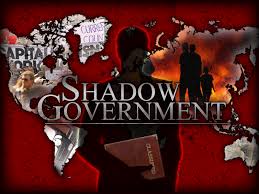 Even when they operate outside the strict letter of law, these heroes remain figures of order and justice, poster children of The Conspiracy that makes itself invisible through immensity. As long as they're to secretly remain integral parts of traditional, institutional society and not be branded enemies of the state, bucking the system and rebelling against The Man will have to remain practices of the common man. The common man created society and has to bear the responsibility of policing it while our heroes use their superior attributes to grab headlines for transitory accomplishments of lesser significance. I still enjoy their adventures in the right context, but I know they can't save us from ourselves or the monsters we've unleashed. Only we have the power to do that.
 Time marched on like it's supposed to and...the audience changed. We learned things that made us ask more questions. "Why?" started coming up with increasing frequency and we sought answers in places that made us look for other parties to hold responsible than whoever happened to be drawing our attention. We wanted to know not only who was behind them, but why our superheroes weren't doing something about them.
This is to say that heroic figures as powerful as some of those presented in popular adventure fiction should also be running about like Fox Mulder, shining lights in dark corners where a lot of folks don't want those lights shining. If these icons were going to truly uphold their ideals, Superman and Wonder Woman would be fighting corrupted governments to protect the oppressed masses, Batman would be more wanted than Rorschach for having exposed the secrets of the Kennedy assassinations and a litany of other shadowy operations far more disturbing than a midnight mugging (though fighting street crime obviously holds a special interest for him, considering...) and Thor would have been labeled an eco-terrorist years ago for his hard stance against pollution. A wise Professor Xavier would use his resources to lead his civil rights activists discreetly lest they draw armed opposition. These and other powerhouses would be targets of The Man.
.jpg)
These sorts of scenarios don't seem to be much focused upon in our fiction. In fact, the Comics Code Authority placed a specific ban upon any creative avenues that would cast authority figures in a bad light. Modern heroic tales go further in that direction from time-to-time since they set the CCA aside, but the protagonists still work largely within the confines of the established order and political powers don't spend their time figuring out how to track them down and kill them in their sleep. In that regard, The Man (in his many guises) probably appreciates the distraction afforded by supervillains, natural disasters, alien invasions and random street crime. 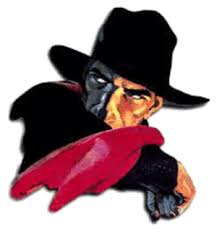 Who knows what evil lurks in the hearts of men? The Shadow Government says it does. Still, there remains the issue of our heroes not being who they appear to be.
 The mystery men and women we call superheroes are much more than their colorful public personas, just as our parents had lives of their own before they started raising children. Many of our iconic heroes are truly nothing like the champions they pretend at being. Behind their costumes, they are royalty (Thor, Wonder Woman, Aquaman, Black Panther, Sub-Mariner), they are the wealthy upper-class (Batman, Zorro, Green Hornet, Iron Man, The Wasp), they are doctors and scientists and government agents. Some are even mild-mannered members of the respected news media (Superman, Captain Marvel). If we want to push the issue of how much the government really knows and covers up, a few of those capes belong to aliens and alien-human hybrids. Can you fight The Man when you are The Man?
Because of the very magnitude of our biggest heroes, they couldn't honestly be allowed to build careers on being rebels against governmental administrations because as loose cannons they couldn't be trusted. They'd quickly be painted as selfish individualists possessed of dangerous abilities that needed to be put in check ASAP. If anything, it looks as though we've been conditioned to celebrate extra-legal champions of the common man while being slipped a simultaneous message to blindly trust the wealthiest and most prestigious among society's power structure as figures of authority. Conversely, it means we can't trust them to stand against the most pervasive forces in our lives. Does that count as sneaky when it's been done right in front of us for decades? Does conditioning us from childhood count as sneaky?
Saturday, February 25, 2012
16572--Never Thought I'd See the Day
Did you hear about the lost e-reader that was found in the basement closet of a guy’s great-aunt? It seems that after she died, the family found the well-preserved piece of technology with its memory still holding electronic versions of hundreds of decades-old comic books and hardcover editions of classic novels. The amazing collection is being appraised with the family expecting to take the e-reader to auction soon. Early speculations anticipate that it should easily command a price well-above its original retail price point.
Wait, no…That’s probably never going to happen.
What was found was a comic book treasure trove that geek dreams are made of. The collection was amassed by a boy decades ago who, in stereotypic geek fashion, remained a lifetime bachelor. The books passed on to (insert moans of geeky anguish) family members who didn’t even know what they had! Fortunately, the overlooked gems remained well-preserved until the uninitiated educated themselves and actually looked through the aged collection with discerning eyes. That finally allowed more than two hundred Golden Age books to see the carefully filtered light of day once again, including such rare pieces as the first appearances of the Human Torch, Batman and Superman. That alone is sufficient to set comic hounds salivating.
For those of you not capable of naming all of Earth’s Green Lanterns, telling one Flash from another or detailing the differences between Earth 1 and Earth 2 Superman, let me put it this way: the comics weren’t in perfect condition (some dating back to 1938) were still able to bring in more than expected at auction. Specifically, Marvel Comics #1 sold for $113,525; Detective #27 sold for $522,000; and Action #1 sold for $298,750 (still far from breaking the record on this particular book). Altogether, 222 Golden Age comics were auctioned at the kingly sum of $3,433,342 with the less significant remains of the collection to be auctioned online.
Why won’t this sort of thing ever happen with e-books? Isn’t it obvious? There’s no paper destroy or age and infinite copies means no scarcity. A novice economics student should be able to solve that puzzle. Likewise, those of you lighting up over the big numbers behind the dollar signs, don’t run out and start buying newer comics with the expectation that you’ll be able to duplicate the situation. The conditions that turned those simple ten-cent coal comics into precious diamonds are super-unlikely to ever ever ever conspire to make it all happen again. You’ve got better odds playing Powerball (195,000,000 to 1 for those keeping score).
You see, way back in the 1930s, there was a big, fat economic depression going on. Comic books were a new invention, created by stapling together pages of actual newspaper comic strips. That’s why they came to be called comic books or funny books. They were cheap to make and cheap to buy and not meant to last. Little boys could roll them up, shove them in their pockets and carry them till they found a friend to share them or toss them when they were done with them. Once they started to catch on, the publishers started producing original material for the cheap periodicals, but still nothing that was intended to last for decades. When World War II came along, there was a huge push for paper recycling (it was important, trust me), comics were sent off in GI care packages and moms became notorious for disposing of the worthless junk. After the big war, the popularity of the superheroes turned on them when psychiatrist Fredric Wertham published Seduction of the Innocent (1954), a book purporting that comics were a serious cause of juvenile delinquency. The minor bestseller managed to create a parental panic and pressure the publishers who wanted to survive into self-censorship. Some changed to magazines. Some superheroes disappeared.
Later, in the 1980s, as comics returned from the shadows and began to loosen the reins on their own restraints, there was another surge in popularity. The boom in the market came with a move away from traditional newsprint to brighter, heavier bond papers and new inks. More customers came to the stores (the comic shops that hadn’t even existed a few years earlier), driving higher print runs. So the modern era actually brought us conditions opposite to those seen in the earliest years of comics. We have higher print runs, customers buying multiple issues of special issues, reprints of popular stories, comics designed to last for years without fading being stored better and not being disposed of…ever. Ask that econ student about the value of a commodity that’s abundantly available rather than scarce.
Better still, ask a comic shop owner. After you’ve picked up a few comics you like at a bargain price, you can go blow a couple of bucks on the lottery. Or maybe just stay home and download some 21st century comics and have a good read.
Wait, no…That’s probably never going to happen.
What was found was a comic book treasure trove that geek dreams are made of. The collection was amassed by a boy decades ago who, in stereotypic geek fashion, remained a lifetime bachelor. The books passed on to (insert moans of geeky anguish) family members who didn’t even know what they had! Fortunately, the overlooked gems remained well-preserved until the uninitiated educated themselves and actually looked through the aged collection with discerning eyes. That finally allowed more than two hundred Golden Age books to see the carefully filtered light of day once again, including such rare pieces as the first appearances of the Human Torch, Batman and Superman. That alone is sufficient to set comic hounds salivating.
For those of you not capable of naming all of Earth’s Green Lanterns, telling one Flash from another or detailing the differences between Earth 1 and Earth 2 Superman, let me put it this way: the comics weren’t in perfect condition (some dating back to 1938) were still able to bring in more than expected at auction. Specifically, Marvel Comics #1 sold for $113,525; Detective #27 sold for $522,000; and Action #1 sold for $298,750 (still far from breaking the record on this particular book). Altogether, 222 Golden Age comics were auctioned at the kingly sum of $3,433,342 with the less significant remains of the collection to be auctioned online.
Why won’t this sort of thing ever happen with e-books? Isn’t it obvious? There’s no paper destroy or age and infinite copies means no scarcity. A novice economics student should be able to solve that puzzle. Likewise, those of you lighting up over the big numbers behind the dollar signs, don’t run out and start buying newer comics with the expectation that you’ll be able to duplicate the situation. The conditions that turned those simple ten-cent coal comics into precious diamonds are super-unlikely to ever ever ever conspire to make it all happen again. You’ve got better odds playing Powerball (195,000,000 to 1 for those keeping score).
You see, way back in the 1930s, there was a big, fat economic depression going on. Comic books were a new invention, created by stapling together pages of actual newspaper comic strips. That’s why they came to be called comic books or funny books. They were cheap to make and cheap to buy and not meant to last. Little boys could roll them up, shove them in their pockets and carry them till they found a friend to share them or toss them when they were done with them. Once they started to catch on, the publishers started producing original material for the cheap periodicals, but still nothing that was intended to last for decades. When World War II came along, there was a huge push for paper recycling (it was important, trust me), comics were sent off in GI care packages and moms became notorious for disposing of the worthless junk. After the big war, the popularity of the superheroes turned on them when psychiatrist Fredric Wertham published Seduction of the Innocent (1954), a book purporting that comics were a serious cause of juvenile delinquency. The minor bestseller managed to create a parental panic and pressure the publishers who wanted to survive into self-censorship. Some changed to magazines. Some superheroes disappeared.
Later, in the 1980s, as comics returned from the shadows and began to loosen the reins on their own restraints, there was another surge in popularity. The boom in the market came with a move away from traditional newsprint to brighter, heavier bond papers and new inks. More customers came to the stores (the comic shops that hadn’t even existed a few years earlier), driving higher print runs. So the modern era actually brought us conditions opposite to those seen in the earliest years of comics. We have higher print runs, customers buying multiple issues of special issues, reprints of popular stories, comics designed to last for years without fading being stored better and not being disposed of…ever. Ask that econ student about the value of a commodity that’s abundantly available rather than scarce.
Better still, ask a comic shop owner. After you’ve picked up a few comics you like at a bargain price, you can go blow a couple of bucks on the lottery. Or maybe just stay home and download some 21st century comics and have a good read.
Thursday, January 19, 2012
16535--Accessorizing Characters
This is a lot more serious than a mere chat about fashion. I'm not concerned about purses and earrings and scarves being chosen to be just right for your characters, though that sort of thing does carry more gravitas and finality for them than for you.
When you've written and rewritten and settled on just the right item to make the magic flow the way you feel it needs to go, you have to feel confident that you've made the right choices in providing proper expressions of characterization for the characters. There's a tradition to magic rings, for example, that connects them to the soul of the wearer. So, from Gyges in ancient Greece, the rings of power that rocked the realms of Middle Earth or the power rings of the Green Lantern Corps, the choice of jewelry was significant. Middle Earth might not have been so shaken by a Feather Boa of Doom and it certainly would've made the various characters ask themselves some serious questions about their ability to master it.
Gyges sporting earrings of invisibility wouldn't work to convey the right feel to readers any more than Hal Jordan flying off in a tennis bracelet and Prada shoulder bag to confront cosmic menaces. Granted, for superheroing, it makes about as much sense as the pairing of a ring and lantern (the two being bitter enemies under natural circumstances), but using that ring to create expressions of the hero's will with which to fight evil was an inspired choice. That was an idea that came over time. Originally, Green Lantern's power was just expressed with lots of eerie emerald light...and a smashing purple cape.
Luke Skywalker and Darth Vader needed swords. Jedi and Sith doing battle with rings simply wouldn't feel right either. Even though rings speak to the expression of the characters' essence, they already had a power for that. They needed the contrast of the plasma sword's martial elegance against the use of the Force or else we'd have been watching a lot of stern looks and hand waving.

A character's accessories are important extensions of them whether distinctive clothing or a unique weapon. Warriors should be matched with swift, decisive means of delivering their awesome might (Thor, Conan, Clint Eastwood). Thinkers should have versatile resources through which they can exercise their cleverness (Bond, Batman, Felix the Cat). Passive folk should find themselves with items that are likewise vague and of limited use. Magic slippers come to mind and they are even more passive than magic rings and certainly out of place in a contest of wills and struggles for one's soul. Dorothy Gale did seem awfully light on her feet, though, and maybe Frodo (they're magic, of course they'd fit) could've handled all his walking better with magic shoes instead of that soul-crushing ring. Maybe we could've even gotten in another couple of song and dance numbers.

When you've written and rewritten and settled on just the right item to make the magic flow the way you feel it needs to go, you have to feel confident that you've made the right choices in providing proper expressions of characterization for the characters. There's a tradition to magic rings, for example, that connects them to the soul of the wearer. So, from Gyges in ancient Greece, the rings of power that rocked the realms of Middle Earth or the power rings of the Green Lantern Corps,
 the choice of jewelry was significant. Middle Earth might not have been so shaken by a Feather Boa of Doom and it certainly would've made the various characters ask themselves some serious questions about their ability to master it.
 |
| "Bow before the...queen!" |
Gyges sporting earrings of invisibility wouldn't work to convey the right feel to readers any more than Hal Jordan flying off in a tennis bracelet and Prada shoulder bag to confront cosmic menaces. Granted, for superheroing, it makes about as much sense as the pairing of a ring and lantern (the two being bitter enemies under natural circumstances), but using that ring to create expressions of the hero's will with which to fight evil was an inspired choice. That was an idea that came over time. Originally, Green Lantern's power was just expressed with lots of eerie emerald light...and a smashing purple cape.
Luke Skywalker and Darth Vader needed swords. Jedi and Sith doing battle with rings simply wouldn't feel right either. Even though rings speak to the expression of the characters' essence, they already had a power for that. They needed the contrast of the plasma sword's martial elegance against the use of the Force or else we'd have been watching a lot of stern looks and hand waving.
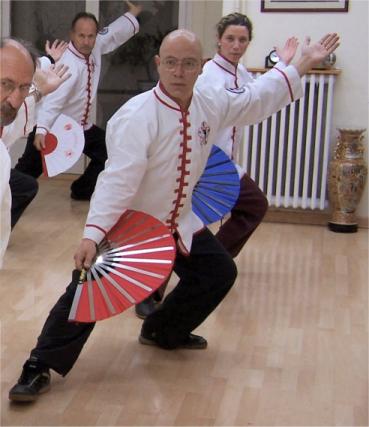
A character's accessories are important extensions of them whether distinctive clothing or a unique weapon. Warriors should be matched with swift, decisive means of delivering their awesome might (Thor, Conan, Clint Eastwood).
 Thinkers should have versatile resources through which they can exercise their cleverness (Bond, Batman, Felix the Cat). Passive folk should find themselves with items that are likewise vague and of limited use. Magic slippers come to mind and they are even more passive than magic rings and certainly out of place in a contest of wills and struggles for one's soul. Dorothy Gale did seem awfully light on her feet, though, and maybe Frodo (they're magic, of course they'd fit) could've handled all his walking better with magic shoes instead of that soul-crushing ring. Maybe we could've even gotten in another couple of song and dance numbers.
Saturday, December 24, 2011
16510--Down from On High
The way they're telling it, our best case scenario has the rock passing between Earth and the moon (which is pretty close for that sort of thing); worst case says we're looking at quakes, tidal waves, floods, plague, famine, death, destruction...you see where this is going. Be concerned if you want to be or don't (but so you know, we're looking at 99.9993% chance of a miss). Either way, I'm not betting on the government to handle things. The government really only seems to handle disasters well in fiction and even then the track record is shaky.
As that sort of thing goes, we'd be better off with Superman. I know, a lot of people love to put all their stock in Batman and I don't want to take anything away from the Dark Knight's street cred, but playing head-kicker with serial killers is vastly different from changing the course of mighty rivers. I've loved both these guys since childhood, but I've always considered Superman to be the superior role model and never had any question that when planes and giant rocks started falling from above, the Bat-signal wasn't going to get the needed help to the right place.
When problems pop-up, Superman is the superhero to go to. I'm not talking about a Superman who falls back on some lame time-travel "solution", creating a paradox where he can just pretend bad things aren't happening. I'm talking about a super man, who oozes noblesse oblige without even knowing it, gets hands-on and gets things done. Superman came to us with not only compassion, but a passionate desire to help us find the best part of ourselves.
That has probably always been one of the most essential virtues of the heroic Kryptonian immigrant: he unselfishly wants to help everyone. It's really sad to me that so many people have expressed some inability to relate to him. I think it saddens me because it displays an inability to acknowledge the brighter virtues within ourselves. If anything, Superman shouldn't seem unreal and alien, but an inspiration. He should represent a standard to which we should aspire. WWSD? The right thing, of course.
Like many heroes before and after him, he's an orphan. Still, he has always allowed the circumstances of his origin to add to his strength and his strength of character. After the better part of a century, he has continued to spark the minds and souls of young and old alike. We should expect nothing less from someone who has descended from a world of wonders to live and walk among us. Even the appeal of innocent Billy Batson's transformation to the purehearted Captain Marvel takes a back seat to Superman's, whose virtuousness is that of an uncorrupted adult. He is not a naive child in the guise of a man. Superman has walked the Earth and seen what it has to offer. He has made informed choices and refused to be led astray.
Superpowers or not, I'd rather be in a world with people with the heart portrayed in these people of conscience, these people who seek only to help and ask nothing in return. No matter who they are--Wonder Woman, Batman, Spider-Man, Doc Savage--or how many they come to number, Superman will ever stand steadfast at their forefront. He is recognized around the world and knowledge of his mission has spread with him. Superman fights for freedom and justice, possesses both power and humility of incalculable measure, all the while setting examples for us to emulate. Like us, he's not perfect, but he also teaches us to never stop striving to become the very best of ourselves.
| |
| Bringing out the best in...*ahem* Moving along! |
Sunday, December 4, 2011
16490--Come to the Bright Side
I side with the good guys. I'll let you know that up front. I enjoy heroes, even the ones with the tarnish on their armor. I'll go as far as enjoying an anti-hero when there's no better option. I suppose it has more to do with being able to see a respectable mission statement driving their actions. I love Superman and Wonder Woman, but I also am a fierce supporter of Batman and The Shadow and Jack Bauer.
I don't cheer for the bad guys or think they're cool. Sure, I can see that there are varying shades of bad, ranging from the laughable and sad all the way out to horrifying agents of inhuman evil. Some people find themselves drawn to the seductions of the dark and consider those of a heroic nature to be weak or "lame". I keep an eye on those people. They make me wonder about them.
I don't live under a rock, so I've seen the rise in interest of vampires as heroic and romantic figures rather than as predatory villains that an audience will enjoy seeing defeated. I still find this a curious phenomenon and find that fighting the dark side makes far more sense. Give me "Blade" over "Twilight" any day. I'm still on the fence over "Star Wars", since Lucas added all that stuff about the "good guys" starting up a slave army. I definitely wasn't crazy about Darth Maul being a popular Halloween costume choice.
Long ago, I went to watch a movie with a friend. It was a comedy remake of a foreign film that ran longer than it needed to, but my friend really wanted to see it. Let's just say that it focused on three men and a baby of uncertain parentage. This was an era when irresponsible sex or, as Julia Roberts taught us, being a prostitute to a rich guy was funny. Anyway, at the climax of the film, a couple of the men and the baby were being pursued by gun-wielding criminals intent on doing bodily harm to the helpless comic actors. My friend bounced on the edge of her seat tensely urging the protagonists to "Get away! Get away!" with anxious whispers. To me, it was obvious that they'd come out OK because this wasn't the kind of movie that Hollywood was about to throw a bloody body count into any sooner than they would bring a serial killing pedophile onto "Full House" to destroy the Olsen twin empire in its infancy. Still, she made me wonder..."Are there bad guys out there cheering for the criminals to catch the men and the baby even though it was clear that there was no chance of evil triumphing in this movie?" There was no way for me to answer that at the time, so I filed it away in the vast brain cell storage repository I keep atop my neck.
A few years later, I was on a business trip. I worked for IBM at the time, so they were fairly common. On this particular trip, I had the good fortune to meet a lot of people from different parts of the country and talk with one who had worked on a computer network installation in a juvenile detention center. Well, having not had the exposure to the criminal element that I would in years to come, I leapt on the opportunity to explain to him my movie theater question and ask if he had perhaps gleaned any insight he could offer me. He paused thoughtfully and cocked his head to one side as he searched his own memory repository, then looked at me with epiphanous intensity as he said, "You know, they do!"
Ah, sweet confirmation! Even though our entertainment industry has given us the hard-sell on messages like "crime doesn't pay" and "good will triumph", bad guys will cheer for bad guys. Who doesn't like Superman? Bad guys, that's who. When you're composing your next work of intriguing fiction and remembering to infuse your antagonist with heaping quantities of humanity for the audience to identify with, don't be shy about making bad guys bad. Why? Because they are. I've met a lot of them. They're human, but they're quite willing to disregard that you are. Some of them are good at hiding their dark qualities from the masses, but they do harbor them and eagerly seek the bright virtues in you that afford them ready prey. They seek your trust and your empathy. Whether harboring fear or anger or whatever other dark motivators, bad guys are ultimately true to their labels. They range from the laughable and pitiable to the cold and monstrous.
Flirting with the dark may give you a thrill, but you're turning your back on what's good for you to invite something bad inside. Next time you're relishing your gaze into the abyss, delightfully engaged by intriguing villainy, be careful not to lose yourself in there. You have to live with what comes back out.
I don't cheer for the bad guys or think they're cool. Sure, I can see that there are varying shades of bad, ranging from the laughable and sad all the way out to horrifying agents of inhuman evil. Some people find themselves drawn to the seductions of the dark and consider those of a heroic nature to be weak or "lame". I keep an eye on those people. They make me wonder about them.
I don't live under a rock, so I've seen the rise in interest of vampires as heroic and romantic figures rather than as predatory villains that an audience will enjoy seeing defeated. I still find this a curious phenomenon and find that fighting the dark side makes far more sense. Give me "Blade" over "Twilight" any day. I'm still on the fence over "Star Wars", since Lucas added all that stuff about the "good guys" starting up a slave army. I definitely wasn't crazy about Darth Maul being a popular Halloween costume choice.
Long ago, I went to watch a movie with a friend. It was a comedy remake of a foreign film that ran longer than it needed to, but my friend really wanted to see it. Let's just say that it focused on three men and a baby of uncertain parentage. This was an era when irresponsible sex or, as Julia Roberts taught us, being a prostitute to a rich guy was funny. Anyway, at the climax of the film, a couple of the men and the baby were being pursued by gun-wielding criminals intent on doing bodily harm to the helpless comic actors. My friend bounced on the edge of her seat tensely urging the protagonists to "Get away! Get away!" with anxious whispers. To me, it was obvious that they'd come out OK because this wasn't the kind of movie that Hollywood was about to throw a bloody body count into any sooner than they would bring a serial killing pedophile onto "Full House" to destroy the Olsen twin empire in its infancy. Still, she made me wonder..."Are there bad guys out there cheering for the criminals to catch the men and the baby even though it was clear that there was no chance of evil triumphing in this movie?" There was no way for me to answer that at the time, so I filed it away in the vast brain cell storage repository I keep atop my neck.
A few years later, I was on a business trip. I worked for IBM at the time, so they were fairly common. On this particular trip, I had the good fortune to meet a lot of people from different parts of the country and talk with one who had worked on a computer network installation in a juvenile detention center. Well, having not had the exposure to the criminal element that I would in years to come, I leapt on the opportunity to explain to him my movie theater question and ask if he had perhaps gleaned any insight he could offer me. He paused thoughtfully and cocked his head to one side as he searched his own memory repository, then looked at me with epiphanous intensity as he said, "You know, they do!"
Ah, sweet confirmation! Even though our entertainment industry has given us the hard-sell on messages like "crime doesn't pay" and "good will triumph", bad guys will cheer for bad guys. Who doesn't like Superman? Bad guys, that's who. When you're composing your next work of intriguing fiction and remembering to infuse your antagonist with heaping quantities of humanity for the audience to identify with, don't be shy about making bad guys bad. Why? Because they are. I've met a lot of them. They're human, but they're quite willing to disregard that you are. Some of them are good at hiding their dark qualities from the masses, but they do harbor them and eagerly seek the bright virtues in you that afford them ready prey. They seek your trust and your empathy. Whether harboring fear or anger or whatever other dark motivators, bad guys are ultimately true to their labels. They range from the laughable and pitiable to the cold and monstrous.
Flirting with the dark may give you a thrill, but you're turning your back on what's good for you to invite something bad inside. Next time you're relishing your gaze into the abyss, delightfully engaged by intriguing villainy, be careful not to lose yourself in there. You have to live with what comes back out.
Subscribe to:
Posts (Atom)