I'm raising my head from the writing desk to turn my scowl upon an issue that's ignited debate, derision, and controversy. It isn't the first time, but with the current trends dominating the mainstream media it is a topic that's caught more general notice than in years past. I want to talk about what's making nerds so fussy.
Now, I don't want to presume a level of arrogant pontification that insists I speak for all nerds nor imply that the nerd collective is a homogeneous group. From a mass psychology standpoint, though, I think I may have a few insights.
What are nerds bitching about?
Usually, it's about change. Most often debates arise over the merits of some minor tweak or a new development in the mythos of a beloved character. That's to be expected. Seldom does a creative decision garner universal praise. That's alright, though. It should be welcomed by the creative forces. It means readers care.
Ostensibly, that's what any creator seeks for his work: an audience that cares about, perhaps even understands, what's been presented. Where works of fiction are concerned, especially the flights of the fantastic, a reader is expected to BYOSuspension-of-disbelief. It's such a given that printing it on the invitation isn't even necessary. Opening a comic book or sitting down to watch a movie, you've entered into a tacit social contract to be open to accepting the world of the story within the parameters of its reality.
Where do things go wrong? Well, like with any set of quantum realities, every change creates the possibility of branching in at least two different paths. Crossing from one medium to another is fraught with hazard enough, but the change of creative teams is inevitably going to result in a lot of fans getting their imaginary spandex in a twist. I don't think I have to tell you how painful that can be, so I'll just go on with the reasons for it.
Fans of a character are such because they enjoy and embrace the mythos built and handed to them. They accepted it on a psychological/emotional level as an alternate reality as the aforementioned tacit social contract asked them to do. Most of the realms of movies and comics, unfortunately for the fans, are not populated with creator controlled characters. This means that new, sometimes frequently changing, hands are going to be pulling the strings of whatever hero is out to save the world this time. Harry Potter and his fellow students may have made popular reading, but I'm pretty sure that if JK Rowling had stepped aside and allowed Zack Snyder, McG, and finally Tim Burton to take the creative helm on the movie adaptations, the on-screen products would've turned out very differently and we'd still be hearing echoes of the fan outcries.
There's an advisory bit that writers dole out that says "Kill your darlings." It isn't actually advocating wholesale slaughter of your most beloved characters, but is a reminder not to make things too easy for them. To challenge a protagonist and keep readers interested, a writer needs to find someplace in the middle to work adversity into the story. A character's creator is intimately connected to the character's odyssey in a way that fresh hands and minds are not. Attachment to the character's journey inspires a creator to build upon what has come before rather than to abandon it for a new shiny. When a character's fate changes hands, that intimate connection rarely survives the transition. Likewise, the social contract with the fan is often set by the wayside in favor of market forces.
"Market forces" is a fancy way of saying "the company needs to be fed money". To keep the feed coming, a publisher or a studio will often set sights on new, potential fans even at the risk of losing those already established. How does this drive the abandonment of the original social contract? Elements of the previously established mythos are often altered, sometimes eradicated, to allow radical, attention-getting changes to be introduced. It's the murder of the darlings, but...they're somebody else's darlings, so only the people who were attached to them would mind. The last creators are gone, so that just leaves the loyal fans. Feeling betrayed at the theft of the reality they agreed to embrace, they cry out. Some pack up and leave. Destroying the tacit social contract, compounded with the realization that no amount of hard-earned cash will keep it from happening again (if anything, the hunger seems to accelerate the cycle), is just more than some wish to bear.
Can nerds not handle change?
They aren't crying out because they can't handle change or because they're racists or hate women and puppies. The problem is that the fan collective was asked to treat the mythos as real and they did. Then, stuff was changed. Why is that bad? One, because that's not how the real world works; yes, life is rife with change, but you don't just erase your history when you're tired of dealing with it. Two, because they fell in love with it; then, their bait was switched. That's how they feel, anyway. The creation they came to respect and adore was altered rather than built upon. If you shoot Old Yeller and force a new puppy into the story while saying "just go with it", somebody's going to be upset because of the bad storytelling.
Sadly, the trampling of continuity only seems to have grown more blatant, even callous, over the last several years in comics. Reboots and retcons are almost regularly scheduled events. This violates one of the reminders I picked up years ago when I got started writing. It goes "If anything can happen, who cares what does?" and I keep it in mind to remind me to play out a story within a set of established parameters, to give characters limits. No matter how many stories we're given to show us that genies and time machines will cause at least as many problems as they may solve, the comic book and movie people seem to have devolved into a rut of wiping slates and altering realities whenever it suits them. Luring as large a group of readers as you can attract into a new reality, telling them to get comfy with bacon and hot chocolate, and then eradicating the place before they're done with it ("It's a trap!") just isn't cool.
If you're going to create stories for a mythos, try to respect that you're a guest in somebody else's house. If you can't do that, maybe you should build your own.
Showing posts with label comics. Show all posts
Showing posts with label comics. Show all posts
Saturday, March 21, 2015


Saturday, November 15, 2014
17569--Entertainment is for Enjoying
If you're a long-time comic book aficionado and you were watching ARROW this week(11/12/14 "Guilty"), then you likely caught a glimpse of the return of the classic boxing glove arrow, subject of long-running debate. It gave me a laugh, but I'm still among those who think its unwieldy nature should prohibit its presence in the quiver. Still, where better to use it than in a story featuring the boxing hero Ted "Wildcat" Grant?
Also good for some laughs was BIG HERO 6. I haven't read the source material, but the film was fun. The plot was simple enough to be predictable. While that doesn't leave you with a lot of surprises, it's still entertaining. And even though the hero, Jiro, could've and should've used a far more elegant and obvious solution to their supervillain problem (easily cutting down the run time by a third...which also means having to listen to my tactical analysis if you've gone to watch it with me, but if you know me, then you know that's the risk you take in dragging me to a superhero movie), it was still really entertaining.
Don't worry about it. A lot of people finally started realizing that Indiana Jones serves little purpose in Raiders of the Lost Ark but it's still a very enjoyable film. Like The Incredibles, you just don't want to go tugging at threads.
Tuesday, August 19, 2014
17513--You Didn't See Anything
And even if you had...
Do you hear anything? Is it...too quiet?
Several years ago, I enjoyed a comic book series you probably never heard of called Whisper. She was a ninja. More accurately, in her world, she was the ninja. By that, I don't mean she was the most bad-ass ninja. She was the only ninja in the world.
You see, in the history of Whisper's world, the adult Alexis Devin put on a ninja costume to investigate the death of her adoptive father. She learned that he had been not only a businessman, but a ninja in the employ of the Yakuza. Ultimately, the organization's head explained to her that ninjas were a myth, fabricated centuries ago to use the idea of them as a deterrent of fear. Alexis' father had been so enamored of the legend that he had trained to become a ninja, not realizing he was making himself into the only one to actually exist. After his murder, by using the training he had given her, Alexis had also unwittingly taken on the mantle and power of a weapon designed for intimidation. Embracing the idea, she was able to exploit the fear that ninjas inspired against criminals and government agents alike.
Did you know that the United States has over a dozen different members of the alphabet soup club that report to the DNI (Director of National Intelligence) operating under immense secret budgets? Espionage is a big deal. Governments and their militaries have long-relied upon the power of gathering hidden information with invisible eyes. Properly utilized, spies can change the course of a war or make war unnecessary, a single agent accomplishing what ten thousand soldiers might not. It was the serendipitous arrest of British spy John Andre that helped reveal the betrayal of Benedict Arnold and save West Point from being handed to the British. Yeah, that catch was all luck, despite the American military having its own intelligence network. Nowadays, they seem to be working overtime to know...pretty much everything, it seems.
In fiction, we have all manner of intelligence options showing up. We have Bond and Bourne, the IMF, SHIELD, Task Force X (the Suicide Squad), and Checkmate. Star Trek alone has produced the Romulan Tal'shiar, Kardassia's Obsidian Order, and the Federation's Section 31 (which they'll be quick to disavow even exists). Covert manipulation and intelligence gathering is so important a part of governmental and military events that I've had to make sure they were represented in my own world building. In the Theobroma books, the world of Tarakk plays host to the secret activities of the Scales of Justice and smoke agents, the operatives of both being magic-savvy, metamorphing dragons; the infiltrations and espionage of Clan Isharien, rumored to be ruthless practitioners of martial arts and magic; the various government Ministries that vie to influence the Republic of Zadiasam and the lives of its people; and the aloof warlords whose mastery of nanotech and space folding have given them reputations of limitless reach and knowledge.
Conflicts between secret players with access to huge resources can have far-reaching consequences, limited only by the imaginations and ambitions of those pulling the strings from the shadows. Who will determine the outcomes of the wars we see unfolding on the nightly news? Probably the same people who put the figureheads at the forefront of their governments and factions. That is to say, no one most of us have probably heard of. That's just the way they like it. Out of the public eye, the power behind a throne acts freely.
Do you hear anything? Is it...too quiet?
Several years ago, I enjoyed a comic book series you probably never heard of called Whisper. She was a ninja. More accurately, in her world, she was the ninja. By that, I don't mean she was the most bad-ass ninja. She was the only ninja in the world.
You see, in the history of Whisper's world, the adult Alexis Devin put on a ninja costume to investigate the death of her adoptive father. She learned that he had been not only a businessman, but a ninja in the employ of the Yakuza. Ultimately, the organization's head explained to her that ninjas were a myth, fabricated centuries ago to use the idea of them as a deterrent of fear. Alexis' father had been so enamored of the legend that he had trained to become a ninja, not realizing he was making himself into the only one to actually exist. After his murder, by using the training he had given her, Alexis had also unwittingly taken on the mantle and power of a weapon designed for intimidation. Embracing the idea, she was able to exploit the fear that ninjas inspired against criminals and government agents alike.
Did you know that the United States has over a dozen different members of the alphabet soup club that report to the DNI (Director of National Intelligence) operating under immense secret budgets? Espionage is a big deal. Governments and their militaries have long-relied upon the power of gathering hidden information with invisible eyes. Properly utilized, spies can change the course of a war or make war unnecessary, a single agent accomplishing what ten thousand soldiers might not. It was the serendipitous arrest of British spy John Andre that helped reveal the betrayal of Benedict Arnold and save West Point from being handed to the British. Yeah, that catch was all luck, despite the American military having its own intelligence network. Nowadays, they seem to be working overtime to know...pretty much everything, it seems.
In fiction, we have all manner of intelligence options showing up. We have Bond and Bourne, the IMF, SHIELD, Task Force X (the Suicide Squad), and Checkmate. Star Trek alone has produced the Romulan Tal'shiar, Kardassia's Obsidian Order, and the Federation's Section 31 (which they'll be quick to disavow even exists). Covert manipulation and intelligence gathering is so important a part of governmental and military events that I've had to make sure they were represented in my own world building. In the Theobroma books, the world of Tarakk plays host to the secret activities of the Scales of Justice and smoke agents, the operatives of both being magic-savvy, metamorphing dragons; the infiltrations and espionage of Clan Isharien, rumored to be ruthless practitioners of martial arts and magic; the various government Ministries that vie to influence the Republic of Zadiasam and the lives of its people; and the aloof warlords whose mastery of nanotech and space folding have given them reputations of limitless reach and knowledge.
Conflicts between secret players with access to huge resources can have far-reaching consequences, limited only by the imaginations and ambitions of those pulling the strings from the shadows. Who will determine the outcomes of the wars we see unfolding on the nightly news? Probably the same people who put the figureheads at the forefront of their governments and factions. That is to say, no one most of us have probably heard of. That's just the way they like it. Out of the public eye, the power behind a throne acts freely.
Monday, June 17, 2013
17052--Sometimes You Just Have to Sing
You ever get a song in your head you can only seem to get off your mind by singing it? Yeah, me neither. What I did do was go to the theater recently to see Man of Steel.
Let's get a few things clear:
Anyway, Superman movies are usually going to get me into the theater because...well, my first flight efforts had me airborne off the dining room table at age three. The launch platforms escalated from there till my parents (though they deny it to this day) made the cape my grandmother made me disappear. My first comics were kid comics (literal funny books) and Superman. When I was able, lots of old comics, kid comics, etc were sold or traded for more "Superman" comics...and "Superboy" and "Adventure" (starring either Superboy or Superboy and the Legion of Super-heroes). I love superheroes, but I still haven't seen Iron Man 3 or Amazing Spiderman yet. The point is, you make a Superman movie, go ahead and get a ticket ready for me.
This one really must've made an impact on me because I want to talk about it. I don't want to tie-up Twitter and Facebook timelines with my blather. This is where I'm supposed to blather. If you've come here, you were looking for my blather. So, here it is and don't blame me. You came looking for it, after all.
I've been saying for a while that Superman needed a movie that wasn't putting him on a pedestal and showcasing his majesty, instead giving us a display of the power embodied in the world's greatest superhero. I wanted to see him square off against some villain who wasn't Lex Luthor in bone-jarring fight scenes rather than ballet choreographies. You don't rocket him at an opponent at mach five only to slow down for a jaw tap or a toe kick. Man of Steel covered all that. All the fighting that wasn't in Superman the Movie, Superman II, and Superman Returns (Bryan Singer's sequel/tribute to the other two) found its way into Man of Steel. Superman gets to break a few sweats this time out, having multiple skirmishes against multiple Kryptonians and Kryptonian tech. He gets to dig deep to bring out his hero. It's the sort of challenge he needed. Even Jor-El managed to get in a little action. And he was a badass. I've always considered him to be Krypton's non-artistic DaVinci. This time, they also made him a little bit of a hippie, not too far from John Byrne's post-Crisis conception (Lara moreso), breaking the rules to have a kid the way he and Lara wanted, and then get him off-planet. Plus, Jor-El got to put Born-to-be-a-general Zod on his ass, something Zod pretty much deserves whenever possible. I suppose that means what we used to say at IBM was true: you can do anything you want on your last day.
Lara Lor-Van also came off as a bit of a hippie, which is something of a stretch for her. Jor-El's always been an out-of-the-box thinker known to disagree with the Science Council on occasion, but Lara? She was an astronaut and a rocket scientist, so her opening scene really seemed odd till Jor-El explained their anti-establishment ways. I was watching and wondering why they didn't have a way to make her more comfortable till they explained that the couple was trying something that hadn't been done in centuries.
Anyway, great fights. They were gritty, visceral and full of inertia. You can feel the punches all the way in the cheap seats. If Kryptonian biology possesses a super hormone equivalent to testosterone, Metropolis and Smallville (besides looking worse than the City of Townsville after a busy day for the Powerpuff Girls) are going to be thick with the scent of tough guys. Better than putting him on a pedestal, he was shown as being able to earn the trust of the suspicious and paranoid and to inspire hope in the most desperate hearts. These are qualities that make him our greatest hero, best of the best, willing to sacrifice himself for the people as well as fight for them.
WWSD?
He also has that big heart. He's compassionate and self-sacrificing, making the hard choices rather than the easy ones. What Would Superman Do? The right thing. I always trust that. It also informs me to keep an eye on anyone who doesn't like Superman or says they can't relate to him because he's "too good". If you feel like he's too good, then you know you can be better than you are. He's inspiration, the ultimate role model. I wish Zack Snyder could've understood that.
KRYPTONIAN TOYS
The Kryptonian technology and Krypton itself were distinctively stylish, sort of a melding of Byrne's post-Crisis Krypton and Gallifrey, shaped by the nanotech and ultra-physics of an ancient people who were squeezing all they could from their world but forgot to use their mastery of fundamental forces to renew and recycle. Oh, it was so sad. Krypton was dying and there was just no talking her leaders back from the precipice. There's a Klingon adage that says "Only a fool fights in a burning house," but heeding advice was a low priority on doomsday. Jor-El and Lara, were you the last of Krypton's abandoned wisdom? I guess I'll look to sequels to see if our favorite farm boy is able to harness his lost world's technologies or pull any special surprises out of his nanotech fabricated super suit.
SO MANY KRYPTONIANS
Like the fights, more Kryptonian survivors than in all the other films combined. I wish I hadn't had to wait for the credits for all the names because you only put the characters they did in a film like this to thrill fans who know them. If you're going to do that, find a way to name them in the film so I know who you're trying to show me. Remembering that Faora Hu-Ul is a dangerous badass (second longest sentence in the phantom zone, folks) was something I was glad wasn't overlooked. In the comics, she was a solo act. People who grow to be serial killers usually are. Faora was a man-hating sexual predator, practitioner of klurkor (Kryptonian unarmed combat) with mastery of horo-kanu (a martial style focusing on pressure point manipulation) and kept a freezer that would've put a scare into Jeffrey Dahmer. On top of all that, her oft-forgotten psychic pain induction power doesn't contribute to her tolerating men who think themselves her equal or more, either. Putting her in the military or teaming her with Zod, which has become popular, holds her back. She's given Superman (and the other phantom zone felons) plenty of trouble on her own and is proud of it.
About the villains, let me also say this: Zod's head. General Dru Zod (portrayed by Michael Shannon) has got a positively striking head. I don't know how else to say it. I just love it. It's a great villain head. In fact, it may be one of the best villain heads ever. It looks like an angry block of stone sitting atop his mass of armored warrior. He was also well-played. Both he and Superman are going to pull emotion from an audience.
It's not perfect. It's far from perfect. I was a little disappointed that there was no one speaking Kryptonian. Let's just say that it's overdue. As arrogant as most of Zod's pack was, it would've made more sense than learning to gibber like a bunch of primitives they were planning to kill in a few minutes anyway. Oh, that's right, the surviving Kryptonians intend to restore their lost civilization on Earth, but without the annoying part about sharing the world. As if the genocide weren't bad enough, I don't know how they intended to succeed. They made mention of Krypton's many colony attempts on other worlds that had all failed dismally without Krypton's support. That 100% failure rate didn't seem to bother them, though, they were ready to make another stab at it here. They were devoted to the party line instilled by genetic engineering and nurture, but practicing on Venus or Mars would've made more sense.
I wasn't thrilled with whatever they thought they were doing with the phantom zone, making Jor-El's cheap and easy system of incarceration into a complicated quantum mechanics ordeal that probably shouldn't have been experimented with near any home worlds. It seems an interesting Kryptonian hobbyist project, but it just doesn't sit well with me as a "phantom zone". Even when it was a flying crystal cage or mobile dimensional inversion (also wrong), it resulted in Zod holding Jor-El responsible for his banishment. With Jor-El the developer of the projector (comics) and a member of the Science Council, he was directly connected with the extradimensional exile of every one of Krypton's worst. Later, his son would draw their enmity by either continuing to keep them imprisoned or thwarting their escape attempts. Worse still, Jor-El didn't find a realm of sunny beaches and lollipops. Time in the zone isn't going to make anyone less crazy. Regretful maybe, but not less crazy.
I could certainly have done without Superman failing to live up to his full heroic stature. He has it for a bit, but then loses his grip on it. By that, I mean that the most painful parts for me to watch came in his failure to protect so very many lives and then killing Zod. He's Superman. People may die, but not because he didn't try to save them and he certainly doesn't kill. He makes the hard choices and uses the options his powers and intellect afford him to find another way. The bad guys try to kill. Superman opposes them. Hollywood seems to get that on TV (good guys are falling all over themselves to not kill on TV), but not in the movies. Stop taking shortcuts, especially with the superheroes. Being a hero means something special and that's one thing that defines Superman. He doesn't just go crazy and stop being Superman, especially not just because the director of the week can relate better to a character who kills than to a hero who doesn't. There are reasons he's the outstanding, shining example. Killing is not among these.
Speaking of crazy, I'm not crazy about all the monkeying with Superman's suit that's been going on for the last couple of decades. I love the classic suit, but not having it here didn't hurt the film. No one seems to know what to do with a secret ID anymore, though. This film included, but it plays on both sides of the fence. Clark seems to care a bit about it in regard to the world-at-large, but I also get the feeling that it became the worst-kept secret in Smallville. For a minute, I was reminded of watching the TV series with people pressing for full disclosure of secrets that were none of their damned business. Tediously cheap attempt at drama. Learn to say "Thank you" and leave the guy alone; stop trying to kill the golden goose. And do something about the teeth. There are some folks, including some of the "perfect" Kryptonians, who have some...distracting teeth. Either cast better, stop doing close-ups, fit them with prosthetics or CGI the damned things, but WOW. I'm also pretty sure that it wasn't a political statement (Superman doesn't do those), but he takes a hilariously clear position on the domestic use of surveillance drones. HA!
Hollywood will make me happier if they stop making reboots. I find them lazy and as annoying as the comic companies glutting their market with #1 issues. We know our superheroes. I probably won't see this one in the theater again, but I will get a home version eventually and I'm sure I'll watch it at least as much as Superman Returns (which isn't often, but every now and again). If you've read this far, you should check it out, too.
Let's get a few things clear:
- I don't really set out to do movie reviews here. You have your opinions. I have mine.
- I only go to see very few movies at the theater for a few socio-economic reasons that I'll be happy to detail if you like.
- I think I had a third thing, but I don't remember what it was.
Anyway, Superman movies are usually going to get me into the theater because...well, my first flight efforts had me airborne off the dining room table at age three. The launch platforms escalated from there till my parents (though they deny it to this day) made the cape my grandmother made me disappear. My first comics were kid comics (literal funny books) and Superman. When I was able, lots of old comics, kid comics, etc were sold or traded for more "Superman" comics...and "Superboy" and "Adventure" (starring either Superboy or Superboy and the Legion of Super-heroes). I love superheroes, but I still haven't seen Iron Man 3 or Amazing Spiderman yet. The point is, you make a Superman movie, go ahead and get a ticket ready for me.
This one really must've made an impact on me because I want to talk about it. I don't want to tie-up Twitter and Facebook timelines with my blather. This is where I'm supposed to blather. If you've come here, you were looking for my blather. So, here it is and don't blame me. You came looking for it, after all.
I've been saying for a while that Superman needed a movie that wasn't putting him on a pedestal and showcasing his majesty, instead giving us a display of the power embodied in the world's greatest superhero. I wanted to see him square off against some villain who wasn't Lex Luthor in bone-jarring fight scenes rather than ballet choreographies. You don't rocket him at an opponent at mach five only to slow down for a jaw tap or a toe kick. Man of Steel covered all that. All the fighting that wasn't in Superman the Movie, Superman II, and Superman Returns (Bryan Singer's sequel/tribute to the other two) found its way into Man of Steel. Superman gets to break a few sweats this time out, having multiple skirmishes against multiple Kryptonians and Kryptonian tech. He gets to dig deep to bring out his hero. It's the sort of challenge he needed. Even Jor-El managed to get in a little action. And he was a badass. I've always considered him to be Krypton's non-artistic DaVinci. This time, they also made him a little bit of a hippie, not too far from John Byrne's post-Crisis conception (Lara moreso), breaking the rules to have a kid the way he and Lara wanted, and then get him off-planet. Plus, Jor-El got to put Born-to-be-a-general Zod on his ass, something Zod pretty much deserves whenever possible. I suppose that means what we used to say at IBM was true: you can do anything you want on your last day.
Lara Lor-Van also came off as a bit of a hippie, which is something of a stretch for her. Jor-El's always been an out-of-the-box thinker known to disagree with the Science Council on occasion, but Lara? She was an astronaut and a rocket scientist, so her opening scene really seemed odd till Jor-El explained their anti-establishment ways. I was watching and wondering why they didn't have a way to make her more comfortable till they explained that the couple was trying something that hadn't been done in centuries.
Anyway, great fights. They were gritty, visceral and full of inertia. You can feel the punches all the way in the cheap seats. If Kryptonian biology possesses a super hormone equivalent to testosterone, Metropolis and Smallville (besides looking worse than the City of Townsville after a busy day for the Powerpuff Girls) are going to be thick with the scent of tough guys. Better than putting him on a pedestal, he was shown as being able to earn the trust of the suspicious and paranoid and to inspire hope in the most desperate hearts. These are qualities that make him our greatest hero, best of the best, willing to sacrifice himself for the people as well as fight for them.
WWSD?
He also has that big heart. He's compassionate and self-sacrificing, making the hard choices rather than the easy ones. What Would Superman Do? The right thing. I always trust that. It also informs me to keep an eye on anyone who doesn't like Superman or says they can't relate to him because he's "too good". If you feel like he's too good, then you know you can be better than you are. He's inspiration, the ultimate role model. I wish Zack Snyder could've understood that.
KRYPTONIAN TOYS
The Kryptonian technology and Krypton itself were distinctively stylish, sort of a melding of Byrne's post-Crisis Krypton and Gallifrey, shaped by the nanotech and ultra-physics of an ancient people who were squeezing all they could from their world but forgot to use their mastery of fundamental forces to renew and recycle. Oh, it was so sad. Krypton was dying and there was just no talking her leaders back from the precipice. There's a Klingon adage that says "Only a fool fights in a burning house," but heeding advice was a low priority on doomsday. Jor-El and Lara, were you the last of Krypton's abandoned wisdom? I guess I'll look to sequels to see if our favorite farm boy is able to harness his lost world's technologies or pull any special surprises out of his nanotech fabricated super suit.
SO MANY KRYPTONIANS
Like the fights, more Kryptonian survivors than in all the other films combined. I wish I hadn't had to wait for the credits for all the names because you only put the characters they did in a film like this to thrill fans who know them. If you're going to do that, find a way to name them in the film so I know who you're trying to show me. Remembering that Faora Hu-Ul is a dangerous badass (second longest sentence in the phantom zone, folks) was something I was glad wasn't overlooked. In the comics, she was a solo act. People who grow to be serial killers usually are. Faora was a man-hating sexual predator, practitioner of klurkor (Kryptonian unarmed combat) with mastery of horo-kanu (a martial style focusing on pressure point manipulation) and kept a freezer that would've put a scare into Jeffrey Dahmer. On top of all that, her oft-forgotten psychic pain induction power doesn't contribute to her tolerating men who think themselves her equal or more, either. Putting her in the military or teaming her with Zod, which has become popular, holds her back. She's given Superman (and the other phantom zone felons) plenty of trouble on her own and is proud of it.
About the villains, let me also say this: Zod's head. General Dru Zod (portrayed by Michael Shannon) has got a positively striking head. I don't know how else to say it. I just love it. It's a great villain head. In fact, it may be one of the best villain heads ever. It looks like an angry block of stone sitting atop his mass of armored warrior. He was also well-played. Both he and Superman are going to pull emotion from an audience.
It's not perfect. It's far from perfect. I was a little disappointed that there was no one speaking Kryptonian. Let's just say that it's overdue. As arrogant as most of Zod's pack was, it would've made more sense than learning to gibber like a bunch of primitives they were planning to kill in a few minutes anyway. Oh, that's right, the surviving Kryptonians intend to restore their lost civilization on Earth, but without the annoying part about sharing the world. As if the genocide weren't bad enough, I don't know how they intended to succeed. They made mention of Krypton's many colony attempts on other worlds that had all failed dismally without Krypton's support. That 100% failure rate didn't seem to bother them, though, they were ready to make another stab at it here. They were devoted to the party line instilled by genetic engineering and nurture, but practicing on Venus or Mars would've made more sense.
I wasn't thrilled with whatever they thought they were doing with the phantom zone, making Jor-El's cheap and easy system of incarceration into a complicated quantum mechanics ordeal that probably shouldn't have been experimented with near any home worlds. It seems an interesting Kryptonian hobbyist project, but it just doesn't sit well with me as a "phantom zone". Even when it was a flying crystal cage or mobile dimensional inversion (also wrong), it resulted in Zod holding Jor-El responsible for his banishment. With Jor-El the developer of the projector (comics) and a member of the Science Council, he was directly connected with the extradimensional exile of every one of Krypton's worst. Later, his son would draw their enmity by either continuing to keep them imprisoned or thwarting their escape attempts. Worse still, Jor-El didn't find a realm of sunny beaches and lollipops. Time in the zone isn't going to make anyone less crazy. Regretful maybe, but not less crazy.
I could certainly have done without Superman failing to live up to his full heroic stature. He has it for a bit, but then loses his grip on it. By that, I mean that the most painful parts for me to watch came in his failure to protect so very many lives and then killing Zod. He's Superman. People may die, but not because he didn't try to save them and he certainly doesn't kill. He makes the hard choices and uses the options his powers and intellect afford him to find another way. The bad guys try to kill. Superman opposes them. Hollywood seems to get that on TV (good guys are falling all over themselves to not kill on TV), but not in the movies. Stop taking shortcuts, especially with the superheroes. Being a hero means something special and that's one thing that defines Superman. He doesn't just go crazy and stop being Superman, especially not just because the director of the week can relate better to a character who kills than to a hero who doesn't. There are reasons he's the outstanding, shining example. Killing is not among these.
Speaking of crazy, I'm not crazy about all the monkeying with Superman's suit that's been going on for the last couple of decades. I love the classic suit, but not having it here didn't hurt the film. No one seems to know what to do with a secret ID anymore, though. This film included, but it plays on both sides of the fence. Clark seems to care a bit about it in regard to the world-at-large, but I also get the feeling that it became the worst-kept secret in Smallville. For a minute, I was reminded of watching the TV series with people pressing for full disclosure of secrets that were none of their damned business. Tediously cheap attempt at drama. Learn to say "Thank you" and leave the guy alone; stop trying to kill the golden goose. And do something about the teeth. There are some folks, including some of the "perfect" Kryptonians, who have some...distracting teeth. Either cast better, stop doing close-ups, fit them with prosthetics or CGI the damned things, but WOW. I'm also pretty sure that it wasn't a political statement (Superman doesn't do those), but he takes a hilariously clear position on the domestic use of surveillance drones. HA!
Hollywood will make me happier if they stop making reboots. I find them lazy and as annoying as the comic companies glutting their market with #1 issues. We know our superheroes. I probably won't see this one in the theater again, but I will get a home version eventually and I'm sure I'll watch it at least as much as Superman Returns (which isn't often, but every now and again). If you've read this far, you should check it out, too.
Tuesday, October 23, 2012
16815--Zen and the Art of TV Archery
Taking another shot at adapting an A-list superhero from comic books to TV, executive producer Marc Guggenheim has launched a new visioning of Green Arrow at audiences. Some might debate my assignation of A-list status to a low-tech hero with no superhuman abilities, but I’ll argue that he’s carried his own title, been a long-time member of the Justice League and has a name that the average citizen-at-large won’t respond to with “Who?”. Even without a version of him appearing on the now-defunct “Smallville” for several seasons, he’s a well-known quantity who has never been shy about working in the ranks of the comic universe’s heavyweights. Like his fellow mere mortal Batman, that similar list of credentials is more than enough to qualify his Tough Guy status.
Like others of his costumed stalwarts, the details of his backstory have been tweaked as much as any urban legend. This time around, he’s been presented with a live mother and a dead father, the circumstances behind that being only a part of making him into the heroic figure he has had to become. Still a part of the Gilligan’s Island travel plan, wealthy young socialite Oliver Queen was stranded on a remote island that would serve as the crucible in which he would be tempered. Marooned as the result of sabotage to his yacht this time around, the playboy-reborn-as-Tough-Guy has come back to civilization with an attitude and a secret agenda worthy of the Count of Monte Cristo. Add in the fitful sleep of a troubled soul and they are clearly making the effort of presenting a nuanced protagonist intriguing enough to hold everyone’s attention. Certainly, that’s something the Green Arrow who first appeared in More Fun Comics back in 1941 could not have done in the modern era.
While the hero of “Arrow” may take on gangs of thugs, loose arrows with skill enough to make an Olympic archer go slack-jawed and Parkour like a monkey on Red Bull, executive producer Guggenheim is nothing less than adamant that superpowered heroes like Superman and Green Lantern won't have a place on the show. Wow. What happened to helping your buddies share in the wealth? Courtney Cox may have had plenty of her old co-stars show their faces on “Cougartown”, but it looks like Guggenheim has other ideas about how “Arrow” will play out. Conversely, he also says the show will try to utilize as much of the DC Comics universe as humanly possible:
Like others of his costumed stalwarts, the details of his backstory have been tweaked as much as any urban legend. This time around, he’s been presented with a live mother and a dead father, the circumstances behind that being only a part of making him into the heroic figure he has had to become. Still a part of the Gilligan’s Island travel plan, wealthy young socialite Oliver Queen was stranded on a remote island that would serve as the crucible in which he would be tempered. Marooned as the result of sabotage to his yacht this time around, the playboy-reborn-as-Tough-Guy has come back to civilization with an attitude and a secret agenda worthy of the Count of Monte Cristo. Add in the fitful sleep of a troubled soul and they are clearly making the effort of presenting a nuanced protagonist intriguing enough to hold everyone’s attention. Certainly, that’s something the Green Arrow who first appeared in More Fun Comics back in 1941 could not have done in the modern era.
While the hero of “Arrow” may take on gangs of thugs, loose arrows with skill enough to make an Olympic archer go slack-jawed and Parkour like a monkey on Red Bull, executive producer Guggenheim is nothing less than adamant that superpowered heroes like Superman and Green Lantern won't have a place on the show. Wow. What happened to helping your buddies share in the wealth? Courtney Cox may have had plenty of her old co-stars show their faces on “Cougartown”, but it looks like Guggenheim has other ideas about how “Arrow” will play out. Conversely, he also says the show will try to utilize as much of the DC Comics universe as humanly possible:
| Sorry, pal, they said...uh...our greens would clash. |
"We've got a lot of different characters and then there are characters you may not recognize unless you're a diehard comic book fan. One of the things we've done, mainly because we're fans, is we've thrown in a lot of Easter eggs for the hardcore fans. If you're a big fan of the DC Comics universe, you'll see a lot of familiar names and places: Big Belly Burger, which is a hamburger chain from the Superman comic books, makes a regular appearance on our show and we have a Big Belly Burger franchise as one of our standing sets. You'll still hear about characters from those worlds and from those cities. We're imagining a DC universe without super-powered characters, but that doesn't mean that in our parallel universe that there isn't a Metropolis or a Gotham City. There are references to places like Corto Maltese (a war-torn island) and Markovia. I would listen and watch carefully if you're a comic book fan because some of the references are really subtle and will go past a lot of people."
Now my opinion on this is if they're imagining a DCU without super-powered characters, they‘re not imagining the DCU. If you’re going to piss away the unique infrastructure that goes along with Green Arrow, why bother building a show around that character? It seems ridiculous to waste elements of story that others can't offer in the midst of such a competitive market. The audience may as well go watch “Nikita”, “Revenge” or “Person of Interest”. Or the evening news. Why spend time on a another new series when we already have proven products who've passed their first season hurdles? Oh, it's Green Arrow, you say? Hey, there's a quantity with some potential! Oh, just Green Arrow? You know, we already have plenty of non-super action and drama. We live in it.
Green Arrow lives in a different reality and has the opportunity to explore themes using levels of depth denied to mundane genres. Ignoring that reality sounds like the same error “Smallville” started with when the ultimately ousted producers insisted that “no tights, no flights” was the only cool way to present Superman to the 21st century and a generation that had outgrown such heroes. In time, the people making the show got over themselves and “Smallville“ improved. One of the notable additions to the show, ironically, was Green Arrow (though I hear they really wanted a young Bruce Wayne, but were denied such lofty access). After all these years of adaptations, you would think TV producers would’ve learned by now that acknowledging the integrated universe of such characters works far better than yanking a single thread from a tapestry and pretending that their chosen hero is the only one. I’m waiting for the day someone brings us an adaptation of some popular vampire story, but without all the silliness of biting and fangs and supernatural stuff.
Meanwhile, “Arrow” doesn't have to show people leaping tall buildings, but could slip in references to superhuman activities in newscasts and the odd urban legend mention without letting the idea overrun the show. That sort of thing would certainly put a bigger smile on my mug than a trip through Big Belly’s “drive-thru” lane. I trust “Arrow” and Oliver Queen will prove tough enough to endure creator egos and the rigors of TV ratings to become even better than the better than average showing it has already given us.
Green Arrow lives in a different reality and has the opportunity to explore themes using levels of depth denied to mundane genres. Ignoring that reality sounds like the same error “Smallville” started with when the ultimately ousted producers insisted that “no tights, no flights” was the only cool way to present Superman to the 21st century and a generation that had outgrown such heroes. In time, the people making the show got over themselves and “Smallville“ improved. One of the notable additions to the show, ironically, was Green Arrow (though I hear they really wanted a young Bruce Wayne, but were denied such lofty access). After all these years of adaptations, you would think TV producers would’ve learned by now that acknowledging the integrated universe of such characters works far better than yanking a single thread from a tapestry and pretending that their chosen hero is the only one. I’m waiting for the day someone brings us an adaptation of some popular vampire story, but without all the silliness of biting and fangs and supernatural stuff.
Meanwhile, “Arrow” doesn't have to show people leaping tall buildings, but could slip in references to superhuman activities in newscasts and the odd urban legend mention without letting the idea overrun the show. That sort of thing would certainly put a bigger smile on my mug than a trip through Big Belly’s “drive-thru” lane. I trust “Arrow” and Oliver Queen will prove tough enough to endure creator egos and the rigors of TV ratings to become even better than the better than average showing it has already given us.
Sunday, May 6, 2012
16642--Forgetting Why They Called the Meeting
 I can't be the only one who sees that Hollywood's entertainment industry bears a disturbing similarity to the smiling meteorologist on a TV news show. If you don't see it, here's what I'm thinking: grand predictions and promises are made on a daily basis and, despite repeated failures to deliver, people continue to listen attentively the next day as though some golden wisdom were suddenly going to spew forth.
 This time out, I want to focus my rant-viewer on adaptations from the realm of comic books. These endeavors, putting the adventures of iconic heroes onto TV and movie screens have created a spotty history that we have been glad to see improve tremendously in recent years. One of the stickiest points of translating things from print to video has always been to make the costumed characters look great. Let's face it, you're largely talking about dressing adults in tight, colorful clothing, sometimes with capes, and presenting them as imposing figures of awe. Whether hero or villain, you don't want the character to look ridiculous. Oddly, what looks good on the comic page doesn't always work when brought to life.
 I've always felt the heroes have had the better history of looking good on-screen. Villains seem to have a harder battle with not looking silly. Superman has been given a great deal of screen time, portrayed by several different actors, and looks like he belongs right where he is in his red, blue and yellow next to all of the mundane normal people. He has been confronted mostly, though, by ordinarily garbed antagonists with elaborate schemes rather than classic supervillains. The few who have dressed for the occasion have probably had about a 50:50 success-vs-fail ratio on looking cool. Batman's show from the 60s did a little better in the looks department, probably because a lot of the sets and colors were made to look like they belonged in a comic book. On top of that, many of Batman's opposition sports dressy attire (Egghead, Penguin, Joker, etc.) rather than specialized costuming. The Riddler likes to surprise, so sometimes he's in a suit and tie and sometimes a body stocking, but he looks believable either way.


 Smallville, to digress back to Superman for a moment, kept their characters in civvies until the later seasons. In fact, the producers made a big deal about staying away from even the Man of Steel's classic costume because they felt it was no longer something that a modern audience could relate to seeing. I've seen it most of my life and I never get tired of it. I was glad when they got those producers out and started suspensefully building toward Clark's growing up to not just wear the colors but to earn the inspirational mantle of a role model and icon. I suppose the original team's attitude is part of what bothers me in Hollywood. They didn't even realize that they'd lost sight of why they were doing the show in the first place.
 Whether it's a new superhero who's managed to gain a lot of popularity or one of the older ones (Superman, Batman, Wonder Woman, Captain America), the character is the reason the work is happening. More accurately, I suppose I could say it's the money-making potential of the character, but it's still that costumed figure that's the reason for everyone being on set and not whichever director or producer happens to be attached to the project. To me, that says that audience eyes are going to be watching to see those four-color action figures brought to life not to see what Director X's ego looks like when presenting his special vision of the superhero who's going to have top billing no matter who else gets attached to the project. Check the ego at the door.
Why are the movie X-Men wearing black leather and making fun of their source parentage's colorful wardrobes? I guess somebody thought black leather would look cooler than the distinctive costumes the characters usually wear. Why are all of The Avengers romping about in their new movie in their classic garb except for Hawkeye? I actually had someone tell me they thought the character seemed really cool, but they didn't know his name. Maybe they'd have known him if he dressed like a superhero. Apparently, some Hollywood people didn't feel comfortable letting Hawkeye show off his fabulousness while decked out in the purple he's been wearing for decades. I heard that one concept preceding "Superman Returns" (which went through a ridiculous rotation of cast, directors and writers before the job got done) included dressing Superman in black and having his chest shield unleash flying blades. That affront to costuming and characterization was courtesy of Tim Burton and is far better off having never been produced. Of course, he also got paid millions of dollars for doing no work because he's Tim Burton, so what does that do for his ego?

When it's all wrapped, though, I'm interested in seeing the heroes we know and love, not what whichever replaceable director thought about the character. These characters are supposed to be distinctive and iconic. They're supposed to be brave and bold. That means they shouldn't be embarrassed to go out in public in their capes and tights. They should already know that they look cool without resorting to black leather to appeal to another demographic. The song says, "You don't tug on Superman's cape," not Clark's jacket. Batman's suit doesn't need nipples. Our heroes need to look good and give us stirring adventures where they act like heroes and battle daunting opposition. So long as they do that, we'll watch them happily all day without a second thought about the behind-the-scenes crew.
 Don't take me wrong: I don't want to discount good work behind-the-scenes. I would be delighted, however, if people would stop letting their egos runaway with their good sense. In Marvel's movie-verse, we've been presented with a Black Widow who's an undercover espionage agent who gets thrown into working with superheroes. Sounds like her comic-counterpart. I'm happy. Clint Barton, however, has been presented as a security guard who can use a bow and arrow and disregard orders when he feels like it and still keep his job...and ends up working with superheroes. This guy's not bold enough to wear even a little purple? That one's not thrilling me so much.
Go back to "The Greatest American Hero", adapting a genre character to TV rather than an actual comic character, but a decent effort all the same. In this, they exploited the "silly tights and cape" aspect by putting the hero in the superhero suit and letting him feel openly ridiculous about the look. He had no choice, though, since he got his powers from the suit. They were pretty good powers, too. For that, I think I'd get past feeling silly.
Saturday, April 7, 2012
16613--You Don't Give Someone a Gun Unless You Know Which Way They're Going to Point It
I used to revel in the exploits of superheroes. There were neverending thrills to be found in champions of all things good and right fighting to stem the tide of relentless evil. The willingness of individuals to push themselves beyond the limits of the average, struggling to hew order from chaos in realms where weaker beings dared not, simply felt right.
 Time marched on like it's supposed to and...the audience changed. We learned things that made us ask more questions. "Why?" started coming up with increasing frequency and we sought answers in places that made us look for other parties to hold responsible than whoever happened to be drawing our attention. We wanted to know not only who was behind them, but why our superheroes weren't doing something about them.
This is to say that heroic figures as powerful as some of those presented in popular adventure fiction should also be running about like Fox Mulder, shining lights in dark corners where a lot of folks don't want those lights shining. If these icons were going to truly uphold their ideals, Superman and Wonder Woman would be fighting corrupted governments to protect the oppressed masses, Batman would be more wanted than Rorschach for having exposed the secrets of the Kennedy assassinations and a litany of other shadowy operations far more disturbing than a midnight mugging (though fighting street crime obviously holds a special interest for him, considering...) and Thor would have been labeled an eco-terrorist years ago for his hard stance against pollution. A wise Professor Xavier would use his resources to lead his civil rights activists discreetly lest they draw armed opposition. These and other powerhouses would be targets of The Man.

 The mystery men and women we call superheroes are much more than their colorful public personas, just as our parents had lives of their own before they started raising children. Many of our iconic heroes are truly nothing like the champions they pretend at being. Behind their costumes, they are royalty (Thor, Wonder Woman, Aquaman, Black Panther, Sub-Mariner), they are the wealthy upper-class (Batman, Zorro, Green Hornet, Iron Man, The Wasp), they are doctors and scientists and government agents. Some are even mild-mannered members of the respected news media (Superman, Captain Marvel). If we want to push the issue of how much the government really knows and covers up, a few of those capes belong to aliens and alien-human hybrids. Can you fight The Man when you are The Man?

Because of the very magnitude of our biggest heroes, they couldn't honestly be allowed to build careers on being rebels against governmental administrations because as loose cannons they couldn't be trusted. They'd quickly be painted as selfish individualists possessed of dangerous abilities that needed to be put in check ASAP. If anything, it looks as though we've been conditioned to celebrate extra-legal champions of the common man while being slipped a simultaneous message to blindly trust the wealthiest and most prestigious among society's power structure as figures of authority. Conversely, it means we can't trust them to stand against the most pervasive forces in our lives. Does that count as sneaky when it's been done right in front of us for decades? Does conditioning us from childhood count as sneaky?
 Even when they operate outside the strict letter of law, these heroes remain figures of order and justice, poster children of The Conspiracy that makes itself invisible through immensity. As long as they're to secretly remain integral parts of traditional, institutional society and not be branded enemies of the state, bucking the system and rebelling against The Man will have to remain practices of the common man. The common man created society and has to bear the responsibility of policing it while our heroes use their superior attributes to grab headlines for transitory accomplishments of lesser significance. I still enjoy their adventures in the right context, but I know they can't save us from ourselves or the monsters we've unleashed. Only we have the power to do that.
 Time marched on like it's supposed to and...the audience changed. We learned things that made us ask more questions. "Why?" started coming up with increasing frequency and we sought answers in places that made us look for other parties to hold responsible than whoever happened to be drawing our attention. We wanted to know not only who was behind them, but why our superheroes weren't doing something about them.
This is to say that heroic figures as powerful as some of those presented in popular adventure fiction should also be running about like Fox Mulder, shining lights in dark corners where a lot of folks don't want those lights shining. If these icons were going to truly uphold their ideals, Superman and Wonder Woman would be fighting corrupted governments to protect the oppressed masses, Batman would be more wanted than Rorschach for having exposed the secrets of the Kennedy assassinations and a litany of other shadowy operations far more disturbing than a midnight mugging (though fighting street crime obviously holds a special interest for him, considering...) and Thor would have been labeled an eco-terrorist years ago for his hard stance against pollution. A wise Professor Xavier would use his resources to lead his civil rights activists discreetly lest they draw armed opposition. These and other powerhouses would be targets of The Man.
.jpg)
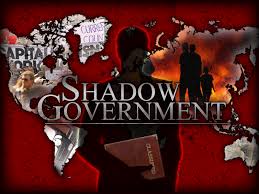
These sorts of scenarios don't seem to be much focused upon in our fiction. In fact, the Comics Code Authority placed a specific ban upon any creative avenues that would cast authority figures in a bad light. Modern heroic tales go further in that direction from time-to-time since they set the CCA aside, but the protagonists still work largely within the confines of the established order and political powers don't spend their time figuring out how to track them down and kill them in their sleep. In that regard, The Man (in his many guises) probably appreciates the distraction afforded by supervillains, natural disasters, alien invasions and random street crime. 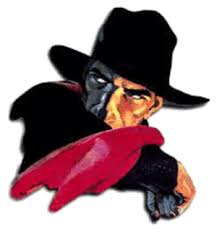 Who knows what evil lurks in the hearts of men? The Shadow Government says it does. Still, there remains the issue of our heroes not being who they appear to be.
 The mystery men and women we call superheroes are much more than their colorful public personas, just as our parents had lives of their own before they started raising children. Many of our iconic heroes are truly nothing like the champions they pretend at being. Behind their costumes, they are royalty (Thor, Wonder Woman, Aquaman, Black Panther, Sub-Mariner), they are the wealthy upper-class (Batman, Zorro, Green Hornet, Iron Man, The Wasp), they are doctors and scientists and government agents. Some are even mild-mannered members of the respected news media (Superman, Captain Marvel). If we want to push the issue of how much the government really knows and covers up, a few of those capes belong to aliens and alien-human hybrids. Can you fight The Man when you are The Man?
Because of the very magnitude of our biggest heroes, they couldn't honestly be allowed to build careers on being rebels against governmental administrations because as loose cannons they couldn't be trusted. They'd quickly be painted as selfish individualists possessed of dangerous abilities that needed to be put in check ASAP. If anything, it looks as though we've been conditioned to celebrate extra-legal champions of the common man while being slipped a simultaneous message to blindly trust the wealthiest and most prestigious among society's power structure as figures of authority. Conversely, it means we can't trust them to stand against the most pervasive forces in our lives. Does that count as sneaky when it's been done right in front of us for decades? Does conditioning us from childhood count as sneaky?
Saturday, February 25, 2012
16572--Never Thought I'd See the Day
Did you hear about the lost e-reader that was found in the basement closet of a guy’s great-aunt? It seems that after she died, the family found the well-preserved piece of technology with its memory still holding electronic versions of hundreds of decades-old comic books and hardcover editions of classic novels. The amazing collection is being appraised with the family expecting to take the e-reader to auction soon. Early speculations anticipate that it should easily command a price well-above its original retail price point.
Wait, no…That’s probably never going to happen.
What was found was a comic book treasure trove that geek dreams are made of. The collection was amassed by a boy decades ago who, in stereotypic geek fashion, remained a lifetime bachelor. The books passed on to (insert moans of geeky anguish) family members who didn’t even know what they had! Fortunately, the overlooked gems remained well-preserved until the uninitiated educated themselves and actually looked through the aged collection with discerning eyes. That finally allowed more than two hundred Golden Age books to see the carefully filtered light of day once again, including such rare pieces as the first appearances of the Human Torch, Batman and Superman. That alone is sufficient to set comic hounds salivating.
For those of you not capable of naming all of Earth’s Green Lanterns, telling one Flash from another or detailing the differences between Earth 1 and Earth 2 Superman, let me put it this way: the comics weren’t in perfect condition (some dating back to 1938) were still able to bring in more than expected at auction. Specifically, Marvel Comics #1 sold for $113,525; Detective #27 sold for $522,000; and Action #1 sold for $298,750 (still far from breaking the record on this particular book). Altogether, 222 Golden Age comics were auctioned at the kingly sum of $3,433,342 with the less significant remains of the collection to be auctioned online.
Why won’t this sort of thing ever happen with e-books? Isn’t it obvious? There’s no paper destroy or age and infinite copies means no scarcity. A novice economics student should be able to solve that puzzle. Likewise, those of you lighting up over the big numbers behind the dollar signs, don’t run out and start buying newer comics with the expectation that you’ll be able to duplicate the situation. The conditions that turned those simple ten-cent coal comics into precious diamonds are super-unlikely to ever ever ever conspire to make it all happen again. You’ve got better odds playing Powerball (195,000,000 to 1 for those keeping score).
You see, way back in the 1930s, there was a big, fat economic depression going on. Comic books were a new invention, created by stapling together pages of actual newspaper comic strips. That’s why they came to be called comic books or funny books. They were cheap to make and cheap to buy and not meant to last. Little boys could roll them up, shove them in their pockets and carry them till they found a friend to share them or toss them when they were done with them. Once they started to catch on, the publishers started producing original material for the cheap periodicals, but still nothing that was intended to last for decades. When World War II came along, there was a huge push for paper recycling (it was important, trust me), comics were sent off in GI care packages and moms became notorious for disposing of the worthless junk. After the big war, the popularity of the superheroes turned on them when psychiatrist Fredric Wertham published Seduction of the Innocent (1954), a book purporting that comics were a serious cause of juvenile delinquency. The minor bestseller managed to create a parental panic and pressure the publishers who wanted to survive into self-censorship. Some changed to magazines. Some superheroes disappeared.
Later, in the 1980s, as comics returned from the shadows and began to loosen the reins on their own restraints, there was another surge in popularity. The boom in the market came with a move away from traditional newsprint to brighter, heavier bond papers and new inks. More customers came to the stores (the comic shops that hadn’t even existed a few years earlier), driving higher print runs. So the modern era actually brought us conditions opposite to those seen in the earliest years of comics. We have higher print runs, customers buying multiple issues of special issues, reprints of popular stories, comics designed to last for years without fading being stored better and not being disposed of…ever. Ask that econ student about the value of a commodity that’s abundantly available rather than scarce.
Better still, ask a comic shop owner. After you’ve picked up a few comics you like at a bargain price, you can go blow a couple of bucks on the lottery. Or maybe just stay home and download some 21st century comics and have a good read.
Wait, no…That’s probably never going to happen.
What was found was a comic book treasure trove that geek dreams are made of. The collection was amassed by a boy decades ago who, in stereotypic geek fashion, remained a lifetime bachelor. The books passed on to (insert moans of geeky anguish) family members who didn’t even know what they had! Fortunately, the overlooked gems remained well-preserved until the uninitiated educated themselves and actually looked through the aged collection with discerning eyes. That finally allowed more than two hundred Golden Age books to see the carefully filtered light of day once again, including such rare pieces as the first appearances of the Human Torch, Batman and Superman. That alone is sufficient to set comic hounds salivating.
For those of you not capable of naming all of Earth’s Green Lanterns, telling one Flash from another or detailing the differences between Earth 1 and Earth 2 Superman, let me put it this way: the comics weren’t in perfect condition (some dating back to 1938) were still able to bring in more than expected at auction. Specifically, Marvel Comics #1 sold for $113,525; Detective #27 sold for $522,000; and Action #1 sold for $298,750 (still far from breaking the record on this particular book). Altogether, 222 Golden Age comics were auctioned at the kingly sum of $3,433,342 with the less significant remains of the collection to be auctioned online.
Why won’t this sort of thing ever happen with e-books? Isn’t it obvious? There’s no paper destroy or age and infinite copies means no scarcity. A novice economics student should be able to solve that puzzle. Likewise, those of you lighting up over the big numbers behind the dollar signs, don’t run out and start buying newer comics with the expectation that you’ll be able to duplicate the situation. The conditions that turned those simple ten-cent coal comics into precious diamonds are super-unlikely to ever ever ever conspire to make it all happen again. You’ve got better odds playing Powerball (195,000,000 to 1 for those keeping score).
You see, way back in the 1930s, there was a big, fat economic depression going on. Comic books were a new invention, created by stapling together pages of actual newspaper comic strips. That’s why they came to be called comic books or funny books. They were cheap to make and cheap to buy and not meant to last. Little boys could roll them up, shove them in their pockets and carry them till they found a friend to share them or toss them when they were done with them. Once they started to catch on, the publishers started producing original material for the cheap periodicals, but still nothing that was intended to last for decades. When World War II came along, there was a huge push for paper recycling (it was important, trust me), comics were sent off in GI care packages and moms became notorious for disposing of the worthless junk. After the big war, the popularity of the superheroes turned on them when psychiatrist Fredric Wertham published Seduction of the Innocent (1954), a book purporting that comics were a serious cause of juvenile delinquency. The minor bestseller managed to create a parental panic and pressure the publishers who wanted to survive into self-censorship. Some changed to magazines. Some superheroes disappeared.
Later, in the 1980s, as comics returned from the shadows and began to loosen the reins on their own restraints, there was another surge in popularity. The boom in the market came with a move away from traditional newsprint to brighter, heavier bond papers and new inks. More customers came to the stores (the comic shops that hadn’t even existed a few years earlier), driving higher print runs. So the modern era actually brought us conditions opposite to those seen in the earliest years of comics. We have higher print runs, customers buying multiple issues of special issues, reprints of popular stories, comics designed to last for years without fading being stored better and not being disposed of…ever. Ask that econ student about the value of a commodity that’s abundantly available rather than scarce.
Better still, ask a comic shop owner. After you’ve picked up a few comics you like at a bargain price, you can go blow a couple of bucks on the lottery. Or maybe just stay home and download some 21st century comics and have a good read.
Sunday, June 5, 2011
16310--So, you wrote a story. Who cares?

If you're going to take the time and use the energy to string words together coherently, you should have a good reason for spilling them out of your head in the first place. I would think you're either trying to take some of the workload off your memory or communicate something to others. When I write here or produce some bit of fiction, it's with the expectation that what I write will be read by others. With that in mind, I make the effort to write things that will be of some interest to other people.
When you're writing a work of fiction, it's likely going to be populated with characters who move your story along from point-to-point. Those characters can't be mindless mules schlepping the tale on their backs. They have to seem as real and interesting as anyone that every reader knows, with lives and purpose all their own. Dress them up, furnish the living room and slap some paint on their walls. When the readers are able to empathize with these characters, they will take an interest in them and care about what happens to them. I was never turned off more quickly about feeling for a character I was reading as at the moment I saw that she didn't care about what was happening to her in her own story. In what had been a story that was holding my interest, the protagonist was suddenly composing a to-do list while being raped. I asked myself, "If she doesn't care what's happening to her, why should I?" I closed the book and never went back.
As a corollary to this, fiction writers who are building their own worlds (and we should know who we are) must build them with rules. Sure, part of the fun of a magical or superscience world is that things can happen there that don't happen in the world we happen to live in every day. Despite that, it still needs to have some degree of structure. The reader will come to your work with an expectation of consistency. To put the corollary simply, "If anything can happen, who cares what does?"
On some level, my feelings about this are a bit strong. Years ago, back when I used to read comic books, I took an afternoon to study a multitude of the industry's stock and trade characters: heroes and villains. This resulted in my making a list of all the characters whose special abilities made sense and a list of those whose didn't. From that point on, I had a more deeply defined respect for the well-crafted characters and wished only for the demise of the stupid ones that had been created only for convenience. Give your characters the time and attention they deserve. Give them their depth and flesh. You'll end up with something you and your readers are happier with.
Oh, if you were in the right movie theater for the right showing of "X-Men 3: The Last Stand", yes, that was me cheering when Cyclops (Scott Summers) was killed. As a character, he's a bit dull. He has a cool superpower, but it's a stupid mutant power. Unleashing devastating beams of concussive force from the eyes manifesting as a mutation in a single generation is ridiculous. He might as well have sprouted big, white bird wings when he hit puberty. Genetically, it lacks about as much sense. Now you know.
I'm going to go grumble to myself some more about stupid comic book characters, but I'd love to hear about any that you'd like to grumble about.
Are there any characters who push your buttons by not being all they could be?
Subscribe to:
Posts (Atom)